
Itoe China Town of Java, jang seanteronja tempat ditinggalin oleh orang Tionghoa meloeloe, dengen loeroeng-loeroengnja jang soenji di mana masih kadengaran soearanja babi di sana-sini hingga membawa soemanget kita terbang ke tepi Huang Ho. —1935, Z.O.Z and Tan Hong Boen, Orang-Orang Tionghoa Jang Terkemoeka di Java.¹
The Story about ‘Imagined Terra’
The quote above seems to convey the feelings of Chinese people (someone with the initials ZOZ and Tan Hong Boen), who describe Lasem as Java’s Chinatown, closely tied to emotional connections by associating the urban space of Lasem in Central Java and its urban landscape with ancestral land in China, specifically along the Yellow River (Huang Ho). The details of the Chinatown atmosphere in Java, with alleyways like those in Mainland China and the sound of pigs, make the sentence above depict that diaspora spaces are not only places to live, but also a medium to evoke hometown experiences that they may never have set foot in or even known because they are Chinese Peranakan.² Not a monumental landmark, but the mention of residential laneways with high, quiet walls and the sound of pigs is a daily depiction, becoming a marker of the collective memory of residents in representing Lasem, which is famous by the nickname ‘Little Tiongkok (China)’ of Java.
The ancestral land in China and the land where the Lasem Chinese Peranakan reside are parts of the ‘terra’ of their identity. Lasem as the ‘physical terra’ where Lasem Chinese Peranakans take root to become Indonesian yet where they can still imagine China as an ‘imagined terra’ in which the Yellow River (Huang Ho) symbolises the root of ancestral identity and the self. Furthermore, the quote above also shows a hybrid identity in which Lasem is depicted as a space of life, memory, resilience, and even imagination about ancestors and ancestral land in Quanzhou, Fujian (Hokkien). Quanzhou, a historic coastal city in Fujian Province, China, is known as the starting point of the ancient Maritime Silk Road. The city was also known as a busy port and trading city in the 10–11th centuries CE, as well as a centre of Minnan (Southern Min/Hokkien) culture.
It is precisely this double inhabitation of terra, the physical and the imagined, the ancestral and the adopted, that Indonesian artist Arahmaiani brings into sharp artistic focus in her video work Shadow of the Past (2018), created in Lasem. Arahmaiani occupies a central position in this essay as its primary creative case study, for her practice enacts the very tensions this text seeks to theorise. Her work in Lasem is not merely illustrative; it is constitutive of the argument. Arahmaiani’s engagement with Lasem’s cultural landscape shaped by generations of Peranakan Chinese negotiation between their ‘terra of origin’ and their ‘terra of dwelling’, provides the essential bridge between the historical data examined in the following sections and the contemporary discourse on ‘terra’ as a site of memory, identity, and ecological care. For Arahmaiani, Lasem is a living instantiation of what she calls Mater Terra or Mother Earth as a feminised and relational understanding of land that refuses the extractive logics of both colonial dispossession and patriarchal governance. Her work thus serves as the interpretive lens through which the historical and theoretical arguments of this essay are brought into dialogue with the living present of Lasem’s cultural acculturation.
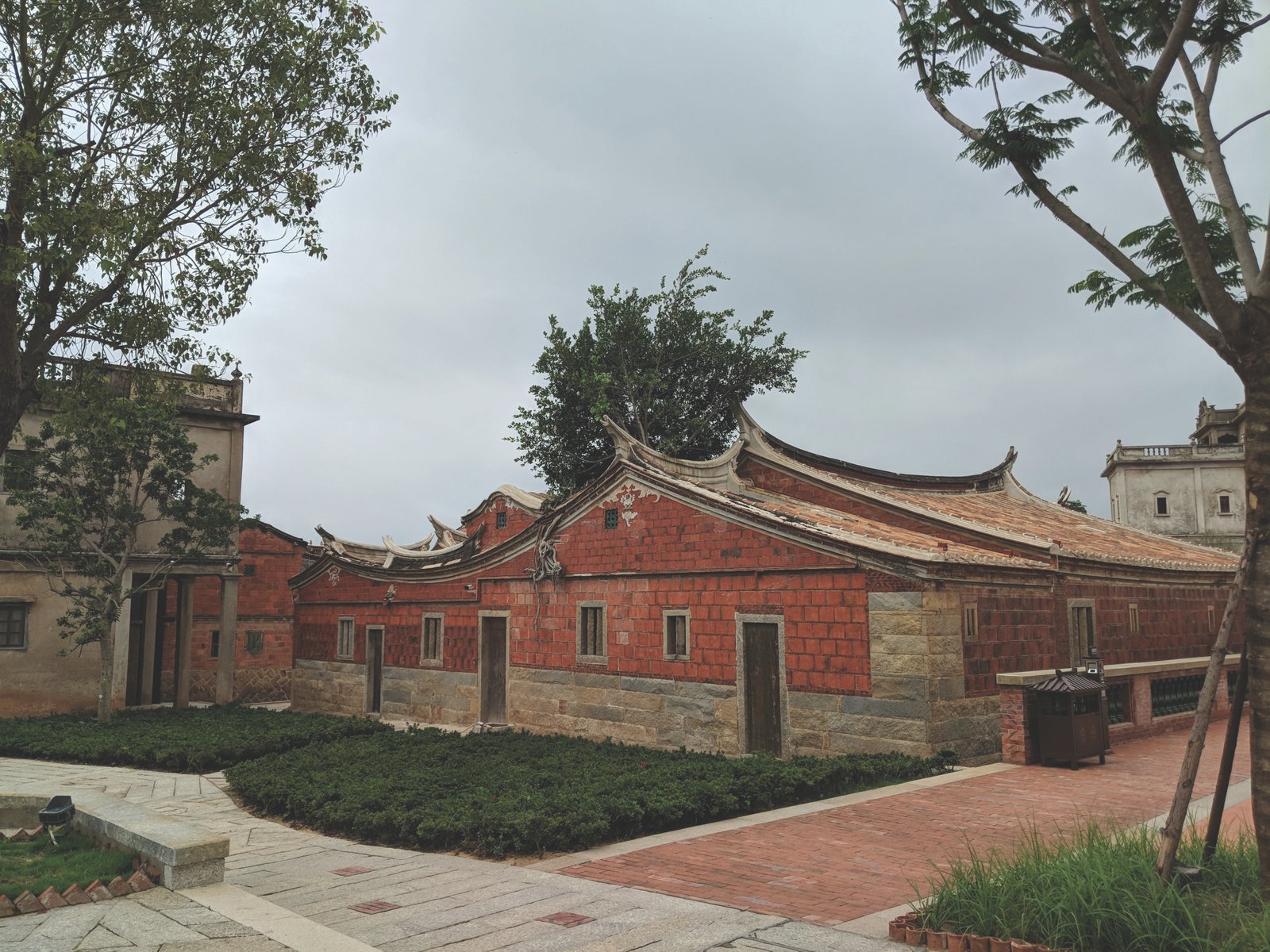
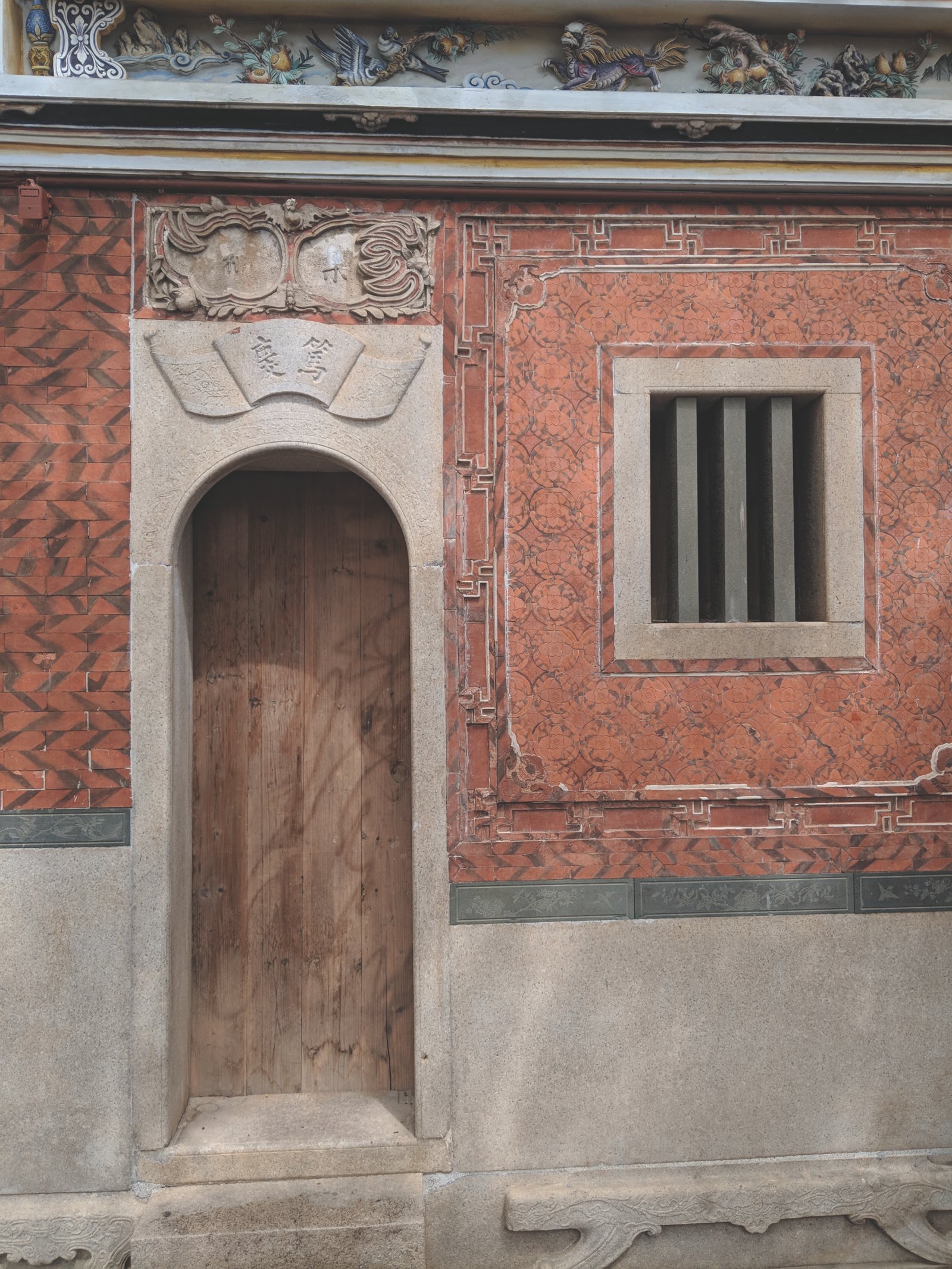
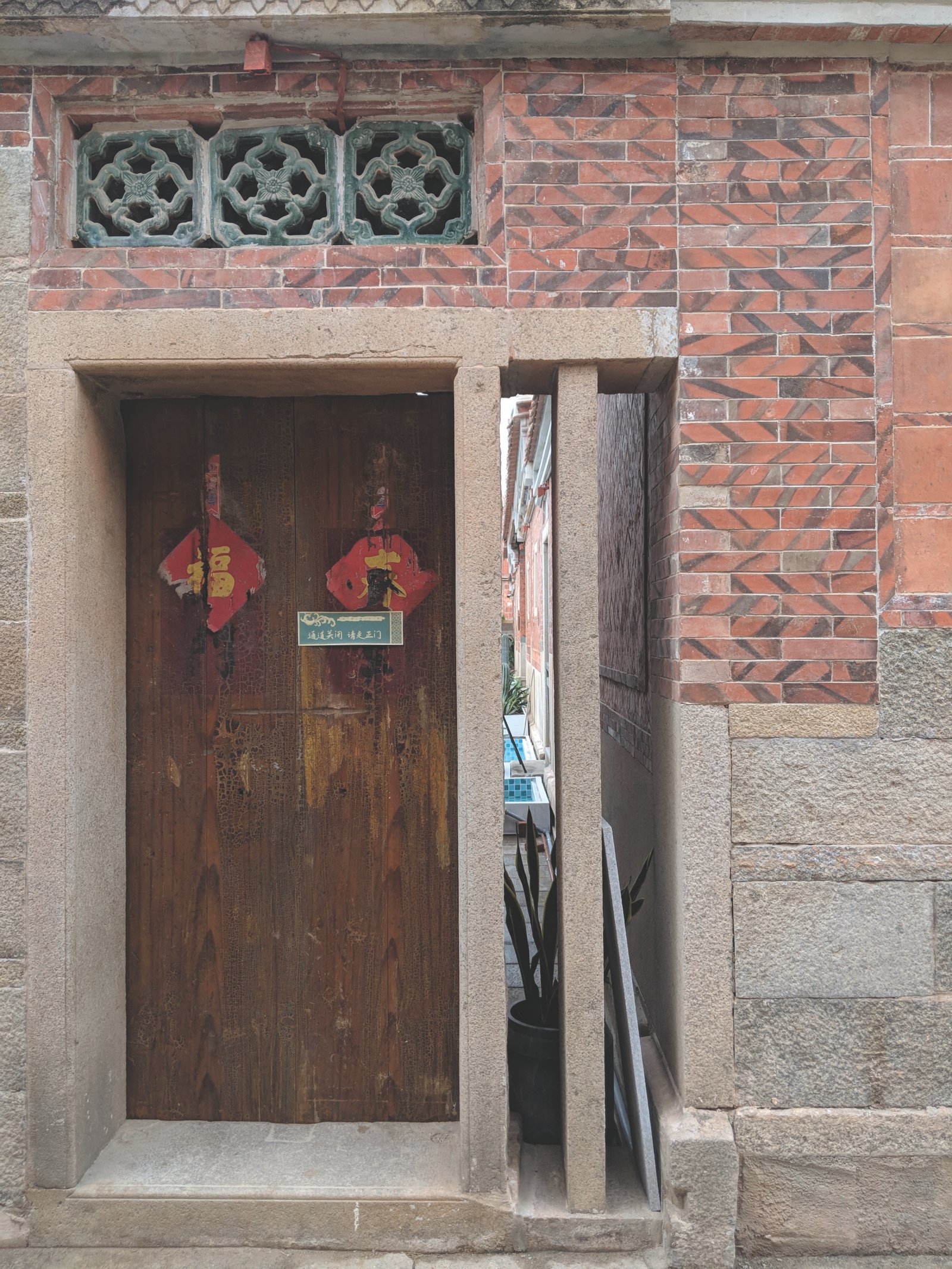
Swallow-tail roof houses, with architectural elements of walls and floors made of terracotta, are characteristic of old Quanzhou settlements, which became a UNESCO World Heritage Site in 2021 titled Quanzhou: Emporium of the World in Song-Yuan China. This recognition reinforces Quanzhou’s importance as a bustling global maritime trade port in the 10–14th centuries CE. Photo: Cory Crossman.
Finding Terra
The concept of ‘terra’ related to the cultural phenomenon of the Chinese Peranakan in Lasem is in line with the definition of terra, which has many variants, such as terra meaning earth and soil, solid ground (terra firma) or fired clay (terracotta), and a broader place in the universe that supports human life and other living things.
In art and critical thought, ‘terra’ serves as both material and metaphor, encouraging contemplation of the many connections between land, culture, environment, and knowledge. Artists have always used the earth as a medium and as a way to learn about environmental and societal issues. Robert Smithson’s Spiral Jetty (1970), Joseph Beuys’s 7000 Oaks (1982), Khvay Samnang’s Where is My Land? (2014), and Tang Da-Wu’s She Asked the Forest for a Moment of Stillness (2023) are all examples of how terra can be used as a material intervention and a metaphorical framework to bring up issues of territory, ecological vulnerability, and cultural memory.
In this regard, artists and researchers can be understood as ‘terra’ in several dimensions. For example, terra relates to physical soil; it is a metaphor for various phenomena such as identity, memory, resilience, the life processes of the universe and the environment, including social change; terra can also be interpreted as a metaphor for the place where contact between humans and their environment occurs, as well as the negotiations that take place between the two. From contemporary artworks and critical theories across various fields of science, the concept of terra has developed into an approach to understanding humans, the environment, history, and the complex dynamics of their relationship. The soil ‘terra’ is not only seen as the material of a work of art but can also be responded to as a variety of conceptual approaches to a ‘place’ and ‘space’ with diverse meanings.
Scientists such as anthropologists and historians have also responded to the conventional concept of ‘terra’. The thinking of anthropologist Bruno Latour and historian Dipesh Chakrabarty fundamentally challenges the notion of ‘terra’ as a passive, inert backdrop to human affairs, recasting it instead as an active and contested site of political and epistemological struggle. In his 2018 work Down to Earth: Politics in the New Climatic Regime, Latour argues that the Earth can no longer be conceived as a neutral surface upon which human history unfolds. He introduces the figure of the ‘Terrestrial’, a political actor constituted by the entanglement of humans and their material environment. For Latour, ‘terra’ is not mere ground; it is an agent that pushes back, that shapes politics, that demands allegiance. This is a provocation directed at the Enlightenment inheritance of separating nature from culture and human from non-human.
In the context of Lasem, Latour’s framework invites us to see the city’s landscape not simply as a stage for cultural memory but as a co-producer of that memory: the terracotta bricks, the swallow-tail roofs, the soil of Lasem’s alleys are themselves participants in the making of Peranakan identity. The land is not a passive receptacle for diaspora sentiment; it actively conditions what forms of belonging become possible.
Dipesh Chakrabarty, in The Climate of History in a Planetary Age (2021), extends this challenge into the domain of historiography and postcolonial thought. Chakrabarty argues that the Anthropocene forces historians to reckon with the Earth as a geological and planetary force, one that profoundly complicates earlier assumptions about human agency and historical progress. Where postcolonial and subaltern history sought to recover marginalised voices from beneath the weight of colonial narratives, Chakrabarty now asks how those very narratives must be rethought in light of a planet that is itself becoming historically legible. His concept of the ‘planetary’ does not erase the political but folds it into a deeper temporality, one in which land, soil, and atmosphere are themselves historical actors bearing the marks of human decisions across centuries. For the study of Lasem, Chakrabarty’s perspective is especially generative: the terracotta of the Fujian diaspora, imported and adapted across ocean and time, embodies precisely this layered temporality in which geological material, colonial politics, and intimate identity are all simultaneously at stake. In this evolving perspective, ‘terra’ becomes a conceptual framework for understanding not only how humans live on and shape the earth, but how the earth, in turn, shapes the conditions of human memory, community, and political life. The question then becomes: how does the concept of ‘terra’ manifest within Lasem’s memory as a historic city, its cultural layers having settled and been inscribed within the very soil and fabric of its built environment?
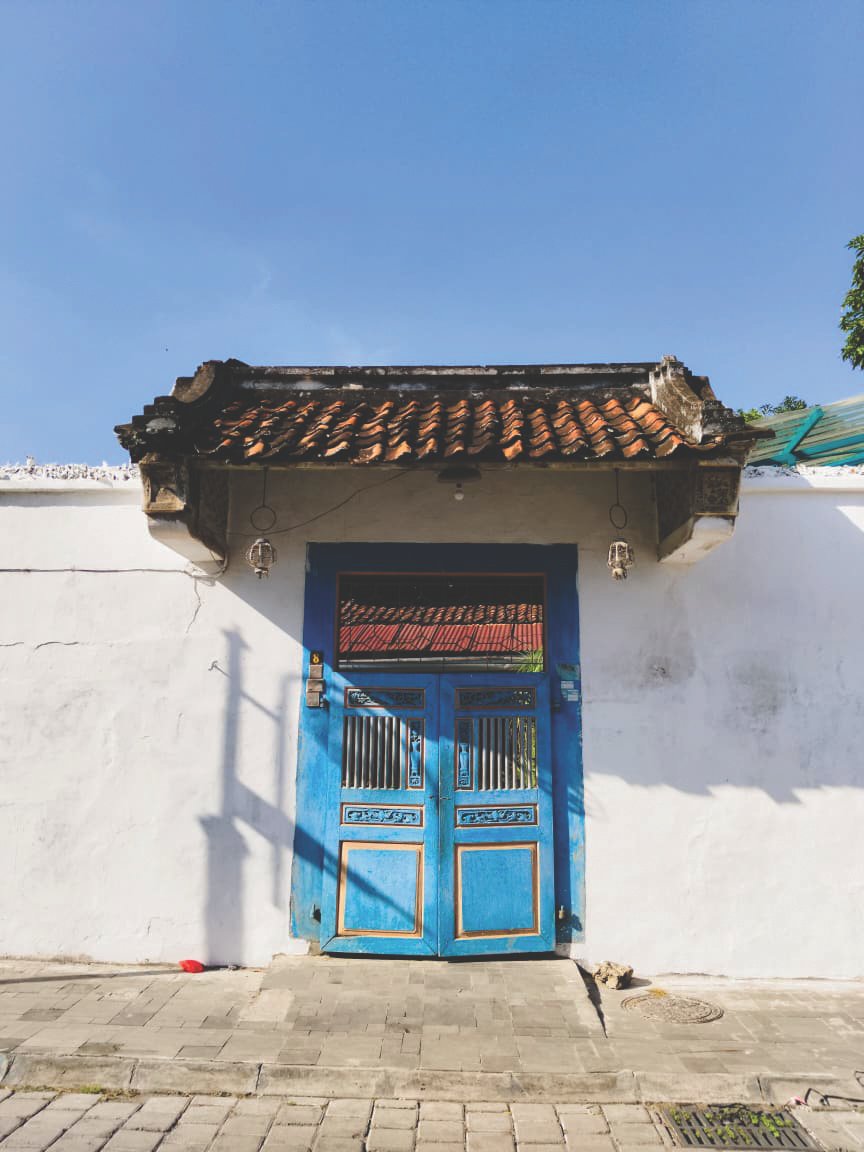
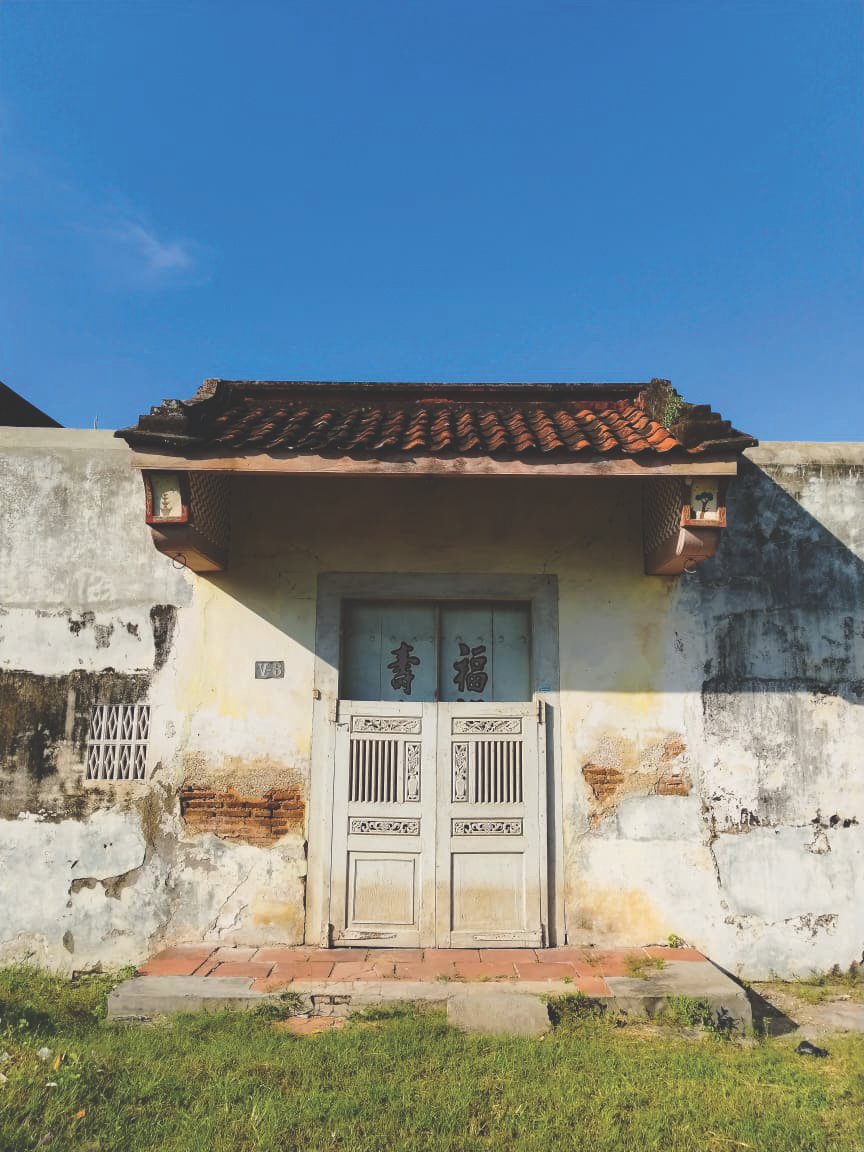
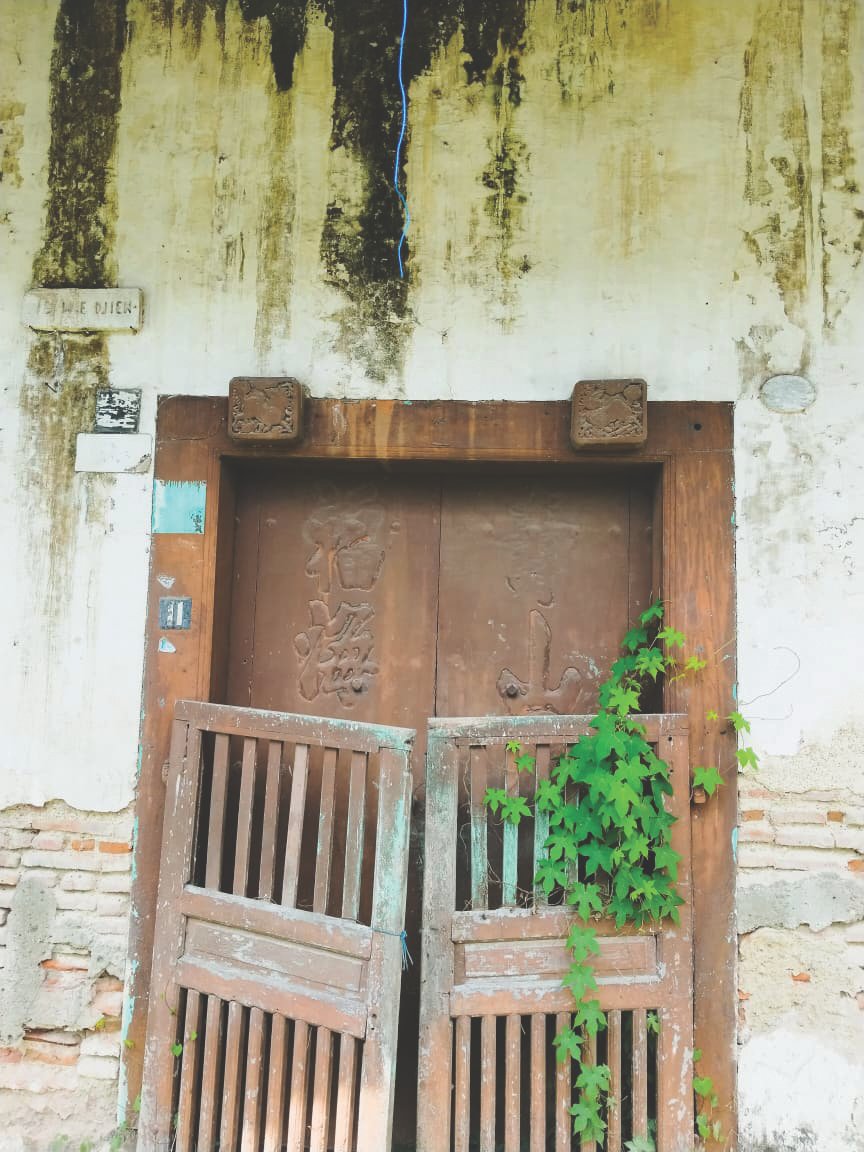
The house gates and fence walls are made of terracotta; the gate and door leaf design is unique because it differs from that of gates in Quanzhou; the use of Chinese characters on the gateway is unusual in Quanzhou, yet used in Lasem. (Photo: Agni Malagina).
Living with ‘Terra Diaspora’
Lasem is a subdistrict town in Rembang Regency, Central Java, Indonesia. Located on the northern coast of Java, this town covers 4,504 hectares and is traversed by the Greater Post Road (Groote Post Weg), built during Dutch colonial Governor-General Herman Willem Daendels’ administration (1808–1811). Thanks to the road, Lasem developed to become a ‘town’. More recently, the town has acquired various nicknames ranging from Kota Batik (Batik Town), Kota Santri (Santri Town), Old Town Lasem, Heritage Town, to Little China or Little Beijing.3
For several centuries, Lasem has been a destination and favourite place for immigrants from China. Since the 15th century,4 Chinese people had sailed with junks to the Nanyang (南洋 or South Seas, a terminology for Southeast Asian countries) or Nusantara (Indonesia), on various missions, expeditions, education, seeking a better livelihood, fleeing natural disasters and political turmoil, trading, and others. In general, researchers such as Henri Borel, Ong Eng Die, Anthony Reid, Claudine Salmon, Wang Gong Wu, and others state that the Chinese in the Nusantara came from the southern coastal provinces of China, Fujian and Guangdong. The number of ethnic Chinese in Rembang–Lasem in the 19th to early 20th century ranked third after Batavia and Semarang.5 In 1900, their number ranked fourth after Batavia, Cirebon, and Semarang.6 This indicates that Rembang–Lasem was one of the main destinations for Chinese immigrants in the Dutch East Indies. Previously, Lasem was a principal destination for Ming loyalist Chinese migrants who went to several main regions in Indonesia, namely Aceh, Banten, Batavia, and Rembang–Lasem.7
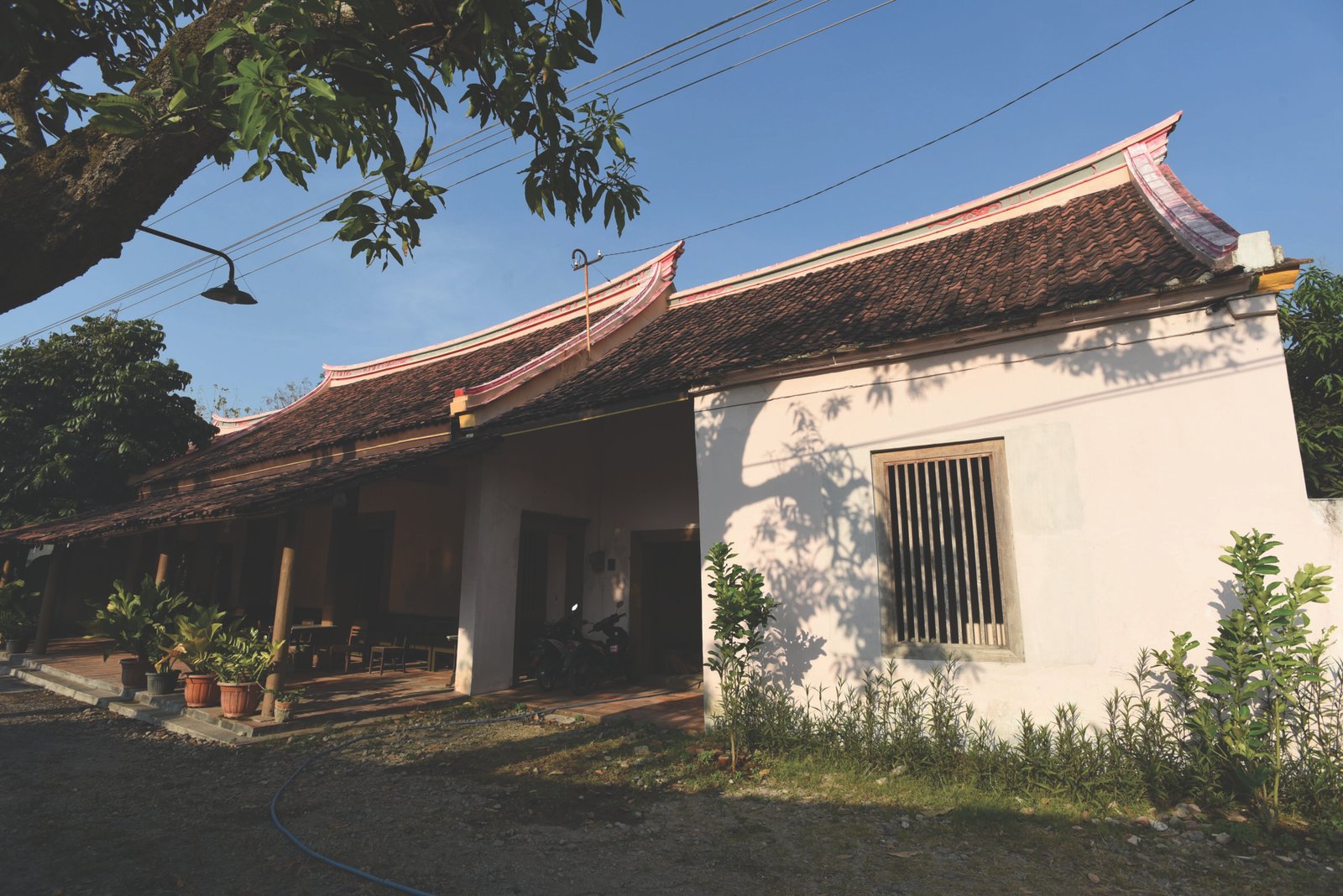
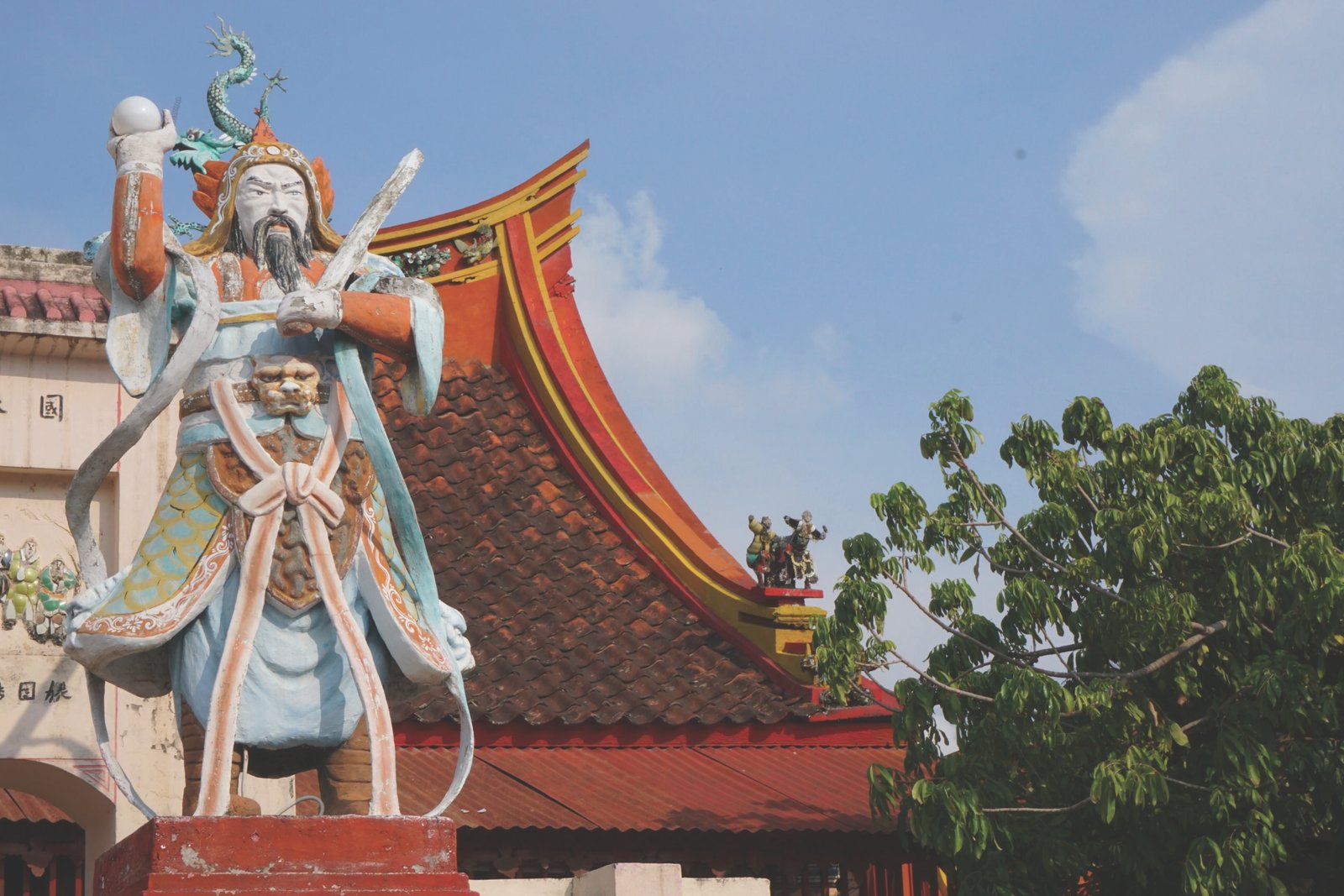
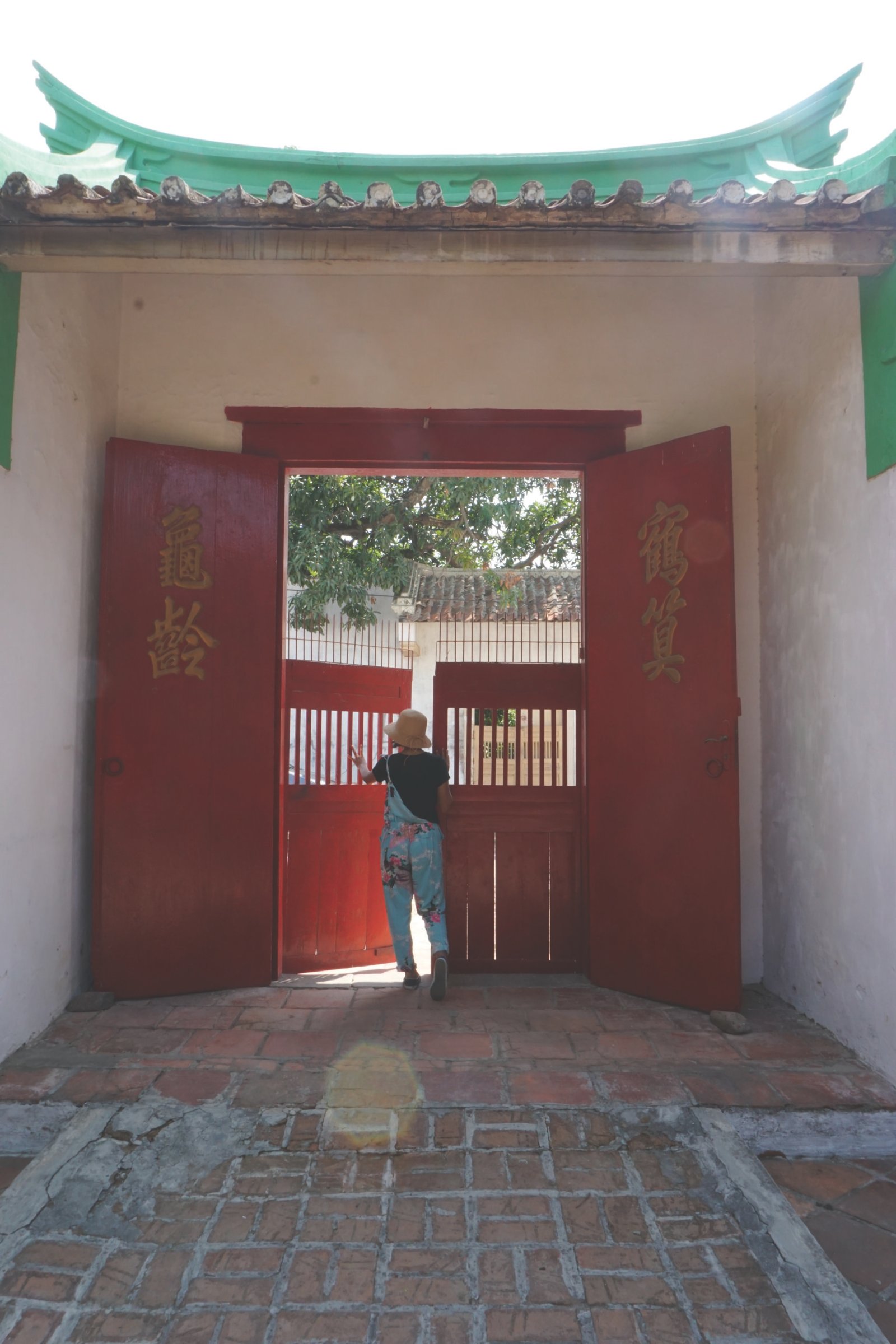
From left to right: the swallow-tail roof made of terracotta still survives at the residence of Captain Lim Ki Siong (Photo: Feri Latief); The roof of Cu An Kiong Temple (Photo: Astri Apriyani); The gate shaped like a swiftlet roof, and the courtyard floor made of terracotta (Photo: Agni Malagina).
Petit Chinois, Little China, or Little Beijing became labels for Lasem’s Chinatown, filled with grand buildings (family courtyards with multiple buildings) that seemingly aim to stand apart from other Nusantara Chinatowns. It is thought to have been established as early as the 10th century—the remains from the Majapahit era at the Caruban site along Lasem’s coast are tangible evidence of the arrival of Chinese in Lasem. Likewise, Binangun, said to be the helmsman of Admiral Zheng He’s ship, who later settled in Lasem, is suspected to have come in 1345.
Similarly, this town was also famous as a source of timber and a centre for the best shipbuilding in the Dutch East Indies since 1650, as it was located in the Residency of Rembang, which covered areas extending to Blora and Bojonegoro and was a producer of the best teakwood in the Nusantara. This former hub of the Dutch opium trade is closely associated with intangible cultural heritage remnants, including 235 old houses in the villages of Soditan, Sumbergirang, Karangturi, Babagan, and Gedongmulyo. Lasem became a unique Chinese settlement area in Indonesia because shophouses, commonly found in most Chinatowns in Indonesia, Singapore, or Malaysia, are absent. All residential buildings are large houses or villas with Chinese (Quanzhou), Indische Empire, and colonial architecture.8 Described as an opium funnel, Lasem, together with Rembang and Juwana, became port towns where opium landed before being distributed to the interior of Central Java. This further reinforced Lasem as a trading and cosmopolitan city due to the large volume of opium trade in the 19th century.9
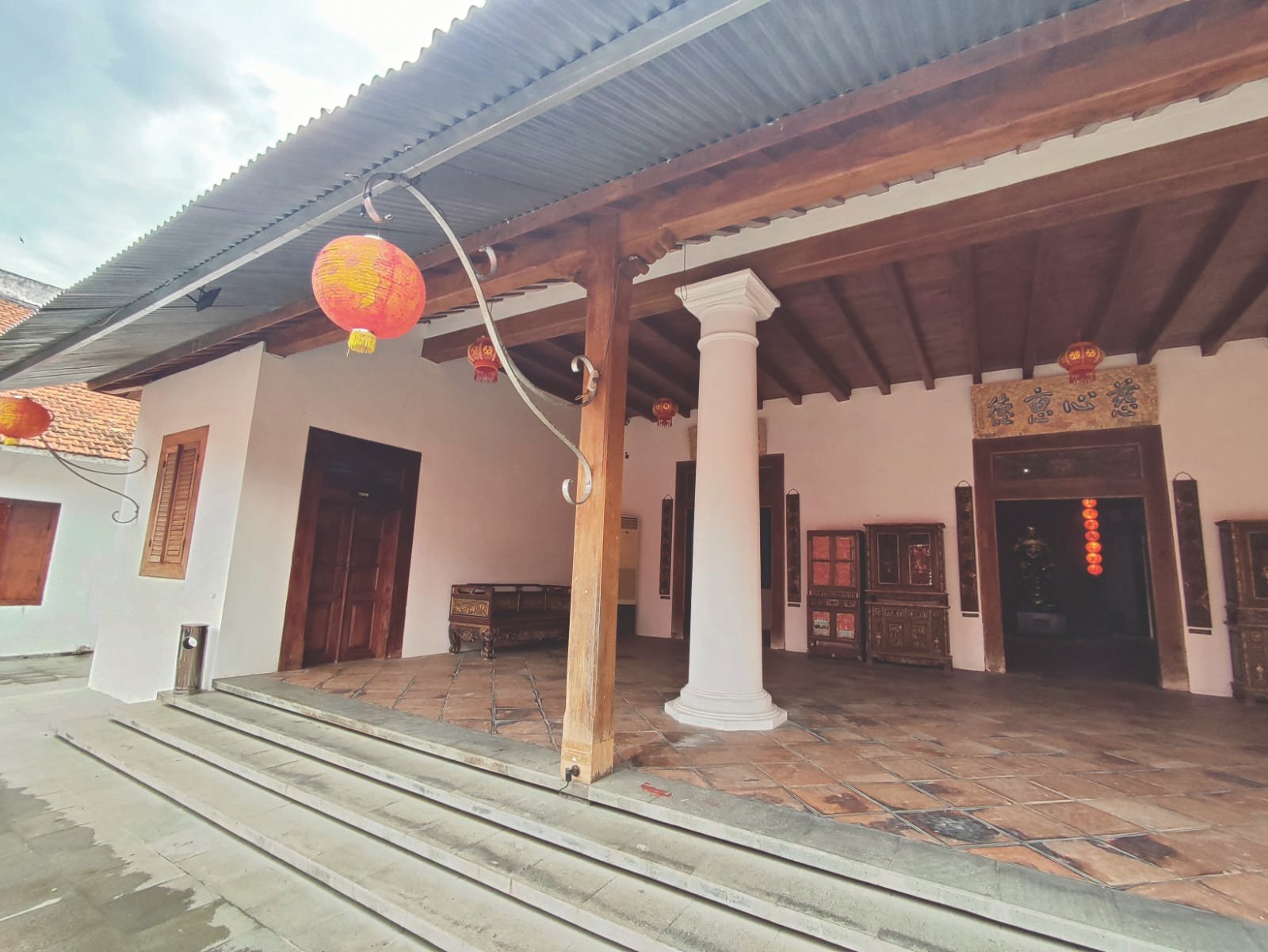
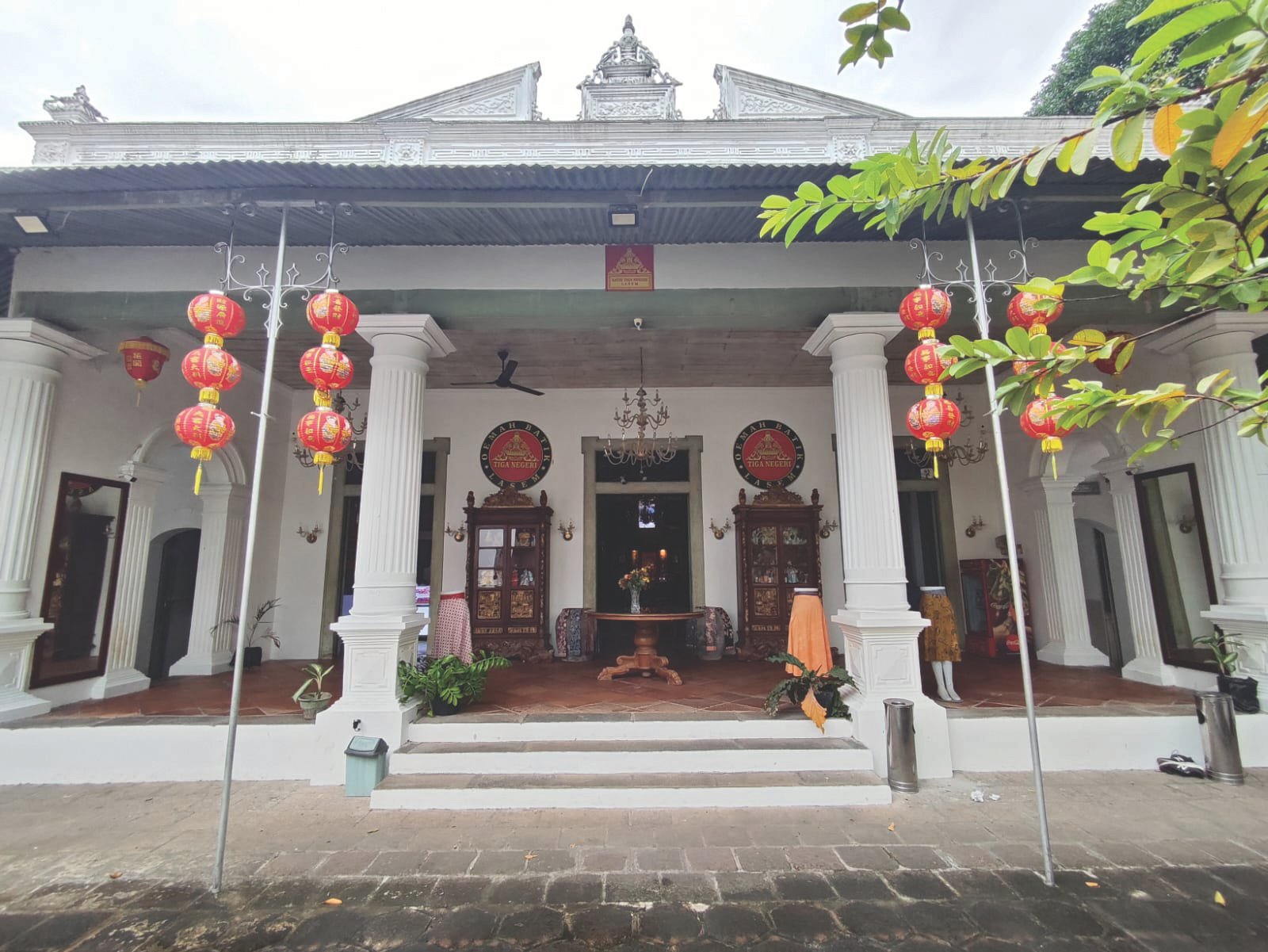
In addition to Fujian-style houses with swallow-tail roofs, there are large houses in the Indische Empire and Indies Chinese Style, believed to have been built throughout the 19th century. The existence of these houses denotes Lasem’s heyday as a trading town, opium town, batik town, shipbuilding industry town, and teak trade town in the 18–19th centuries. (Photo: Agni Malagina).
Not only is this heritage in Lasem manifest in the remnants of ancient buildings, it is also —because of its cultural contact with Java, the Arab world, Persia, China, and Europe—present in a form of northern coastal batik,10 famously known as Lasem Batik, alongside other batiks of the coastal cities in Java. The golden age of batik companies founded by the Lasem Chinese began around the 1860s. Batik enterprises at that time were the most profitable business after the opium trade.11 Lasem Batik entrepreneurs relied on about 2,000 workers for the artistic process and about 4,000 workers for other processes. In 1930, during the golden age of Lasem Batik, there were 120 batik production houses, all owned by Chinese entrepreneurs with a batik trade network covering the entire archipelago, extending out to Singapore, Malaysia, and even Suriname.12
Linking Terra with memory, adaptation, and resilience
Amos Rapoport, a renowned architect and researcher who studied “the role of cultural variables, cross-cultural studies, theory development, and synthesis,” argues that the creation of a type of dwelling is caused by culture as its main determinant. Following Rapoport’s view, the form of the Little China Lasem buildings reflects the interaction of Javanese, Chinese, Arab, and European cultures in the coastal cultural crossings of Java. Likewise, architectural elements preserved as cultural archives in Lasem, such as swallow-tail roof elements, floors, and terracotta walls, are cultural symbols carried by the Chinese diaspora.13
According to architect and urban historian, Handinoto, most Chinese settlements in Southeast Asia, in general, and in Java in particular, originated from two provinces in southern China, Fujian and Guangdong. Fujian and Guangdong have long coastlines and are geographically similar to cities on Java’s northern coast. Therefore, settlement patterns originating in southern China transferred the basic spatial patterns of port areas in southern China to port cities on Java’s northern coast, including the city of Lasem. From “terra Fujian” arriving at “terra Lasem,” hoping to settle forever, the Chinese diaspora in Lasem and their descendants called Lasem 我森村 ‘wǒ sēn cūn’, ‘Lasem my hometown’ or ‘my land’ as written in the inscription of the Cu An Kiong temple renovation in 1838.
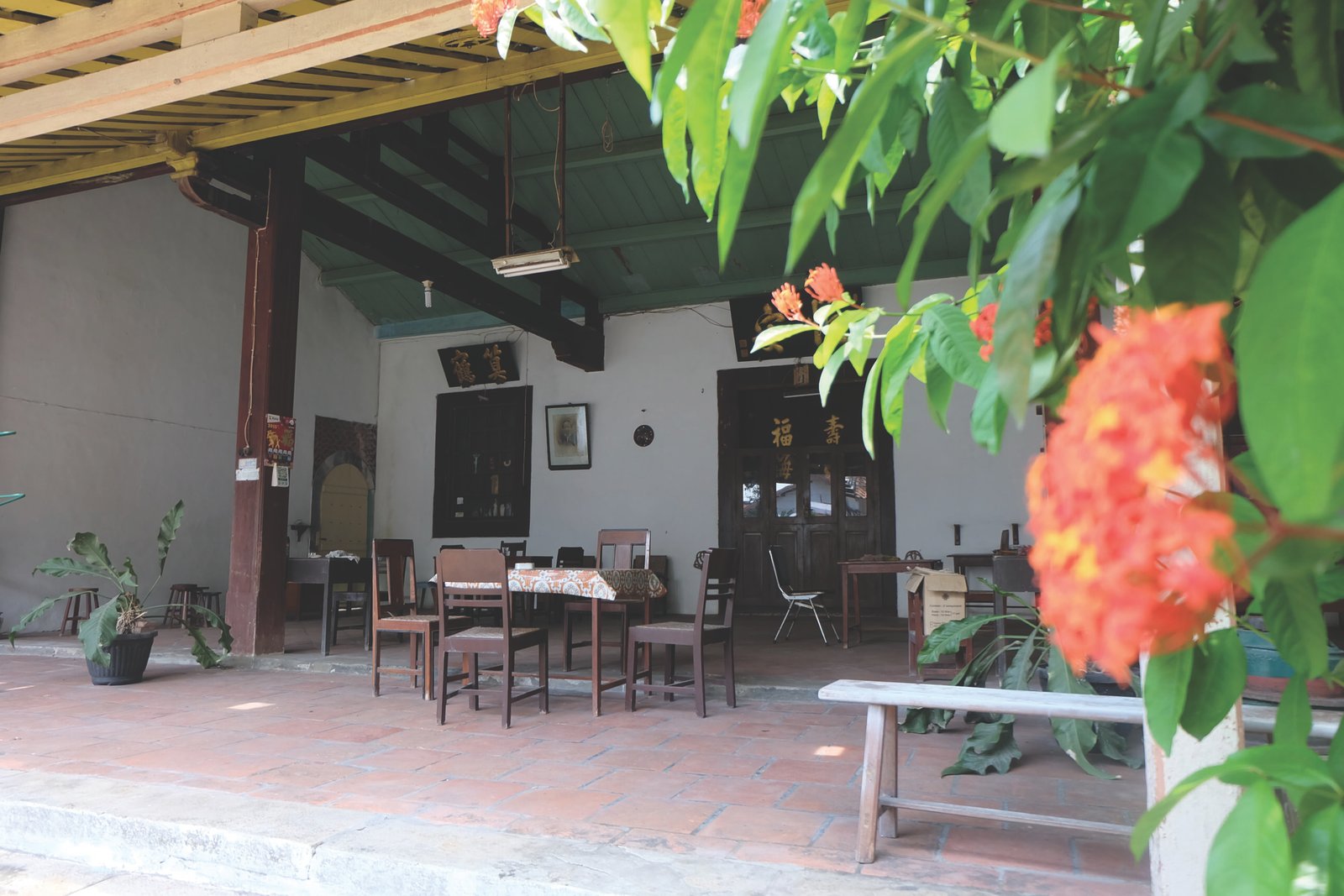
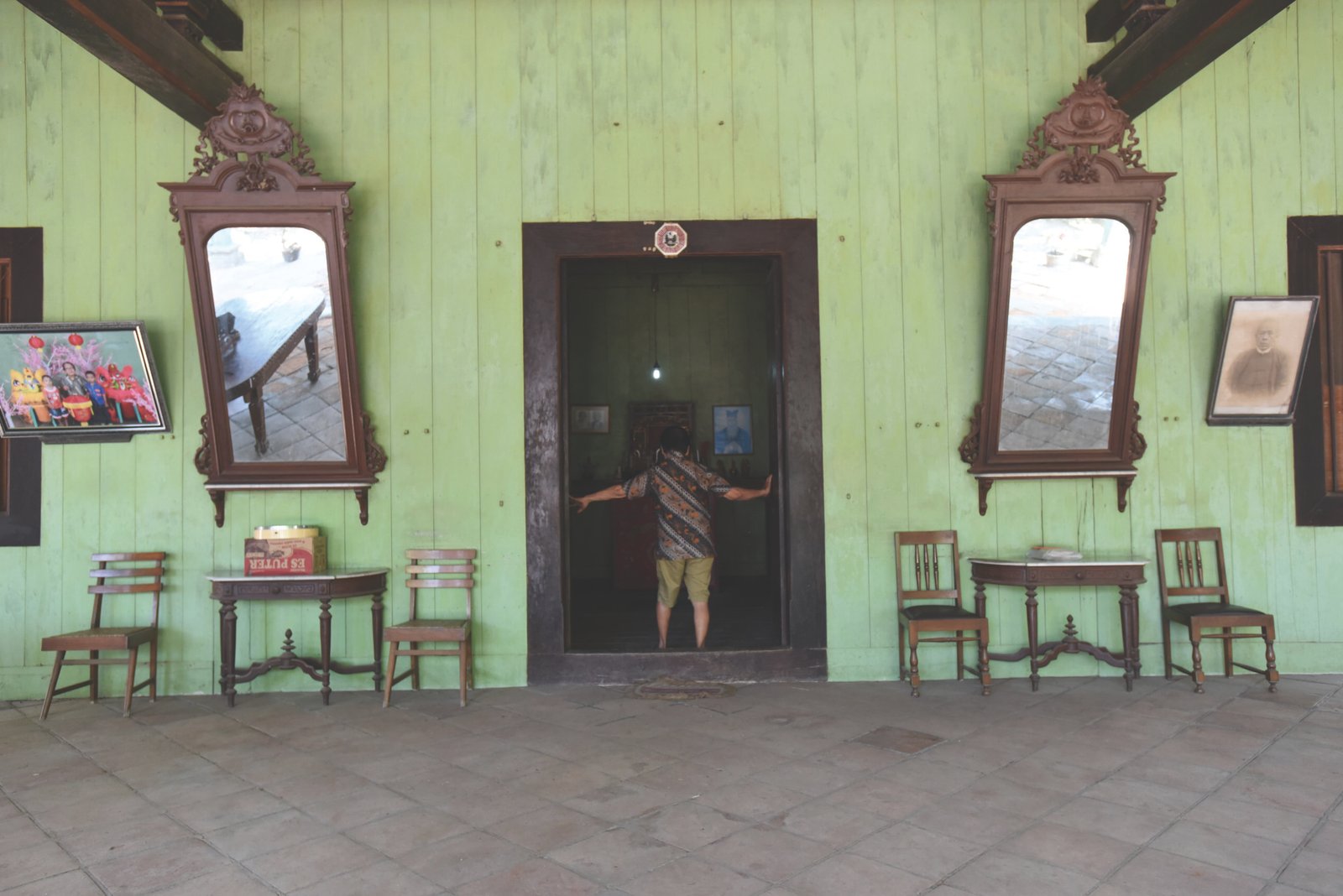
Terracotta floors became a characteristic architectural element brought from Quanzhou to Lasem. Houses built in the late 18th or 19th centuries largely used terracotta floors, which are suspected to have been imported from Quanzhou. (Left photo: Didiet Maulana. Right photo: Agni Malagina).
The architectural style of Lasem’s Chinese quarter is a blend of southern Chinese architecture (the origin of most Chinese people in Lasem), Javanese architecture (coastal and Mataram), and Dutch architectural influences, which developed over time. Pratiwo, in his 2010 book Arsitektur Tradisional Tionghoa Dan Perkembangan Kota, states that Lasem’s architecture has evolved toward modern architecture today. The Lasem Chinese quarter consists of land plots ranging from 500 to 3,000 square meters.14 Currently, at least 235 land plots and old houses remain scattered in the villages of Soditan, Sumbergirang, Karangturi, Babagan, and Gedongmulyo.15 Some characteristics of the houses in Lasem are as follows: courtyards, roof forms such as Quanzhou’s characteristic swallow-tail roofs and Dutch Indies gable roofs, structural elements such as terracotta floors and walls, and simple building colours.
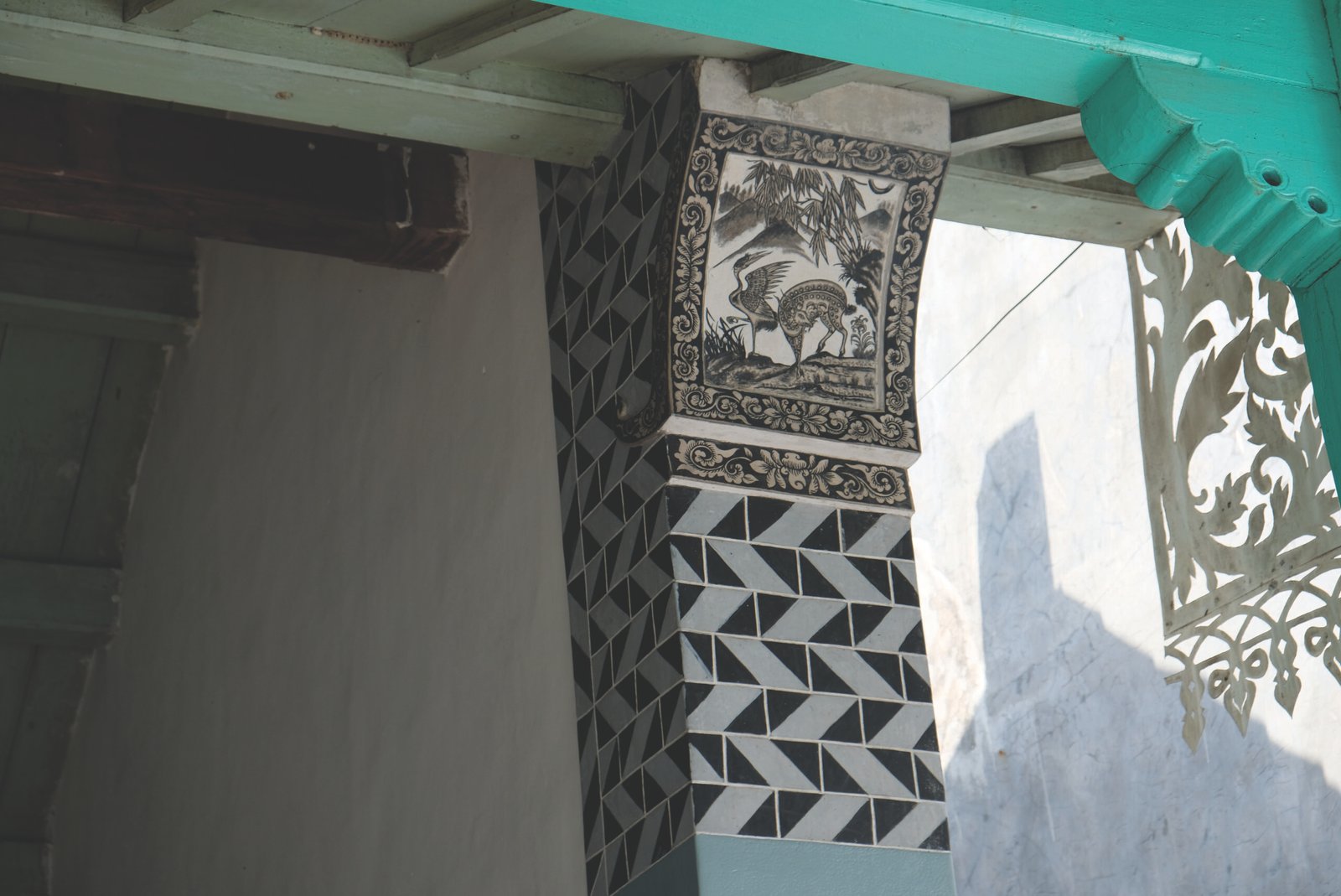
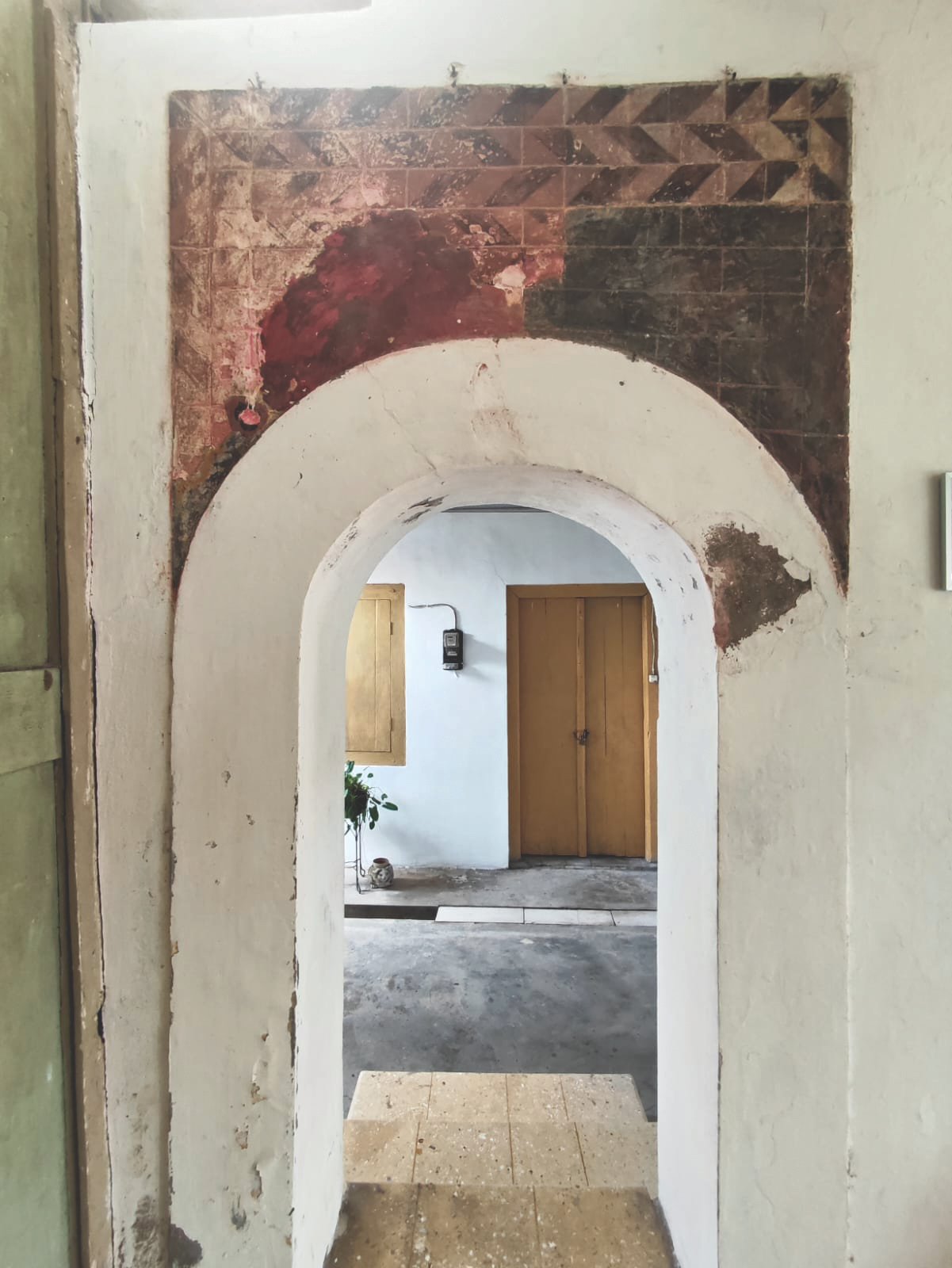
Terracotta floors became a characteristic architectural element brought from Quanzhou to Lasem. The artificial stripe motifs made on curved walls and decorative ornaments above the arches of Lasem house doors are motifs inspired by decorative terracotta motifs on house doors from Quanzhou – the far-right photo is a house door in Quanzhou. (Lasem house photos: Agni Malagina. Quanzhou door photo: Cory Crossman).
The ‘Terra’ element dominates the vernacular architectural style of Peranakan Chinese residences in Lasem. Swallow-tail roofs, tiles, walls, and floors made from Quanzhou’s characteristic terracotta become one of the markers of ‘ancestral heritage’, memory, and identity preserved and guarded by the Lasem Chinese Peranakan. An interesting artistic adaptation to observe is the use of terracotta motifs on walls: the terra and black walls in Quanzhou are made of terracotta bricks produced by a natural firing process. Meanwhile, the red-black zig-zag motif adaptation on wall ornaments in Lasem was a painted technique by incising lines that mimic the form of brick arrangements on the cement layer of the wall. Adding red-black zigzag patterns over the wall achieves the impression of Quanzhou terracotta bricks, an artistic visual illusion created to preserve the identity of Quanzhou vernacular architectural elements in Lasem by the Fujian diaspora community.16
Adapting Quanzhou’s zig-zag terracotta motif into a cement wall motif requires effort to sustain the original identity.17 This process is also an adaptation to the land of settlement, a new environment, while simultaneously forming a hybrid architectural element that differs from the original. Furthermore, the architecture of buildings in Lasem, built by the Fujian diaspora, demonstrates acculturation, adaptation, and community resilience by presenting Minnan Fujian architecture from the Chinese ‘terra of origin’, while combining Javanese and Colonial architectural techniques and styles in the ‘new terra’ of Lasem.
Migration and changes in permanent residence often lead to major transformations, yet diaspora communities can also maintain their identity and culture through cultural adaptation. Thus, in the context of the Quanzhou-Lasem relationship, especially in the terra elements visible in architecture within the cultural landscape of Lasem city, the placement of terracotta bricks and floors, ornamental elements, floor patterns, other terracotta objects, spatial arrangements and terra in garden and neighbourhood layouts not only show aesthetic form, but also become cultural production practices that represent negotiations of identity, memory, territory and efforts of resilience by the Chinese Peranakan community in Lasem. Transcending geographical boundaries, living cultural heritage, traditions and rituals form an imaginary community that connects various locations within the Chinese diaspora through its cultural network.
The artist responds to Lasem as a Mater Terra
Indonesian artist Arahmaiani responded to Lasem’s cultural landscape with a work titled Shadow of the Past (Video, 2018).18 For her, Lasem is not just empty land without memory. She remembers her grandmother, whom she often called Mak Ijah, a woman of Chinese descent who married a Muslim man and who once took her to Lasem when she was young. Her grandmother was an Islamic preacher and sold Lasem Batik cloth that she herself brought from relatives’ homes in Lasem, making Peranakan encim kebaya.19 Kebaya encim is a traditional embroidered blouse worn by Chinese Peranakan women in Indonesia and Singapore, representing a blend of Chinese, Malay, and European cultural influences. Characterised by vibrant colours, lightweight materials, and detailed needlework, it emerged in the 19th century as a symbol of elegance, femininity, and high social status among Chinese Peranakan families.20
The work set in Lasem tells Arahmaiani’s journey of making sense of her life practice studying animism, Hinduism, and Buddhism in Indonesia since the 1980s, especially the heritage of temples that stimulate the imagination, notably Borobudur Temple, the largest Buddhist temple in the world. She was also inspired by the Buddhist scripture Sang Hyang Kamahayanikam. She had researched the relationship between local Buddhism and Tibet in the past. A monk known as Lama Atisha, who became a reformer of Buddhism in Tibet and founded the Kadampa school, once studied at a Buddhist university in Srivijaya for 12 years, receiving guidance from a local master named Dharmakirti (known in Tibet as Lama Serlingpa). She pursued historical knowledge and Buddhist teachings from Indonesia during the Srivijaya kingdom in Sumatra and the Medang kingdom in Java (the Syailendra dynasty, founders of Borobudur), at the Sera Jey Monastery in India. For her, Nusantara Buddhism has a distinct uniqueness in which teachings from various streams and other beliefs can be combined and practiced in an open, syncretic cultural life. This became a characteristic of Nusantara culture where aspects of Buddhism, Hinduism, and Animism assimilate within a clear structure. And subsequently, the same strategy was developed when Islam entered the Nusantara region.
Her activities with monks and laypeople in the Lab Village, Khamp region of Tibet, over the past 15 years have aimed at addressing environmental problems, which of course also became her source of inspiration, and are related to the past in which she was born. The Tibetan Plateau, also known as the Third Pole and the Water Tower of Asia (because it is the source of the major rivers of Asia and the livelihood for more than three billion people), is now threatened by drying. Climate change, also known as global warming, has caused glaciers and even permafrost to melt rapidly, resulting in disasters. In the first five years, she, the monks, and the community succeeded in motivating residents in 16 villages to carry out tree-planting projects, revive organic farming systems, revive nomadic culture and traditions, manage waste and recycle, and create alternative energy systems. The Chinese government has since approved and supported this project.
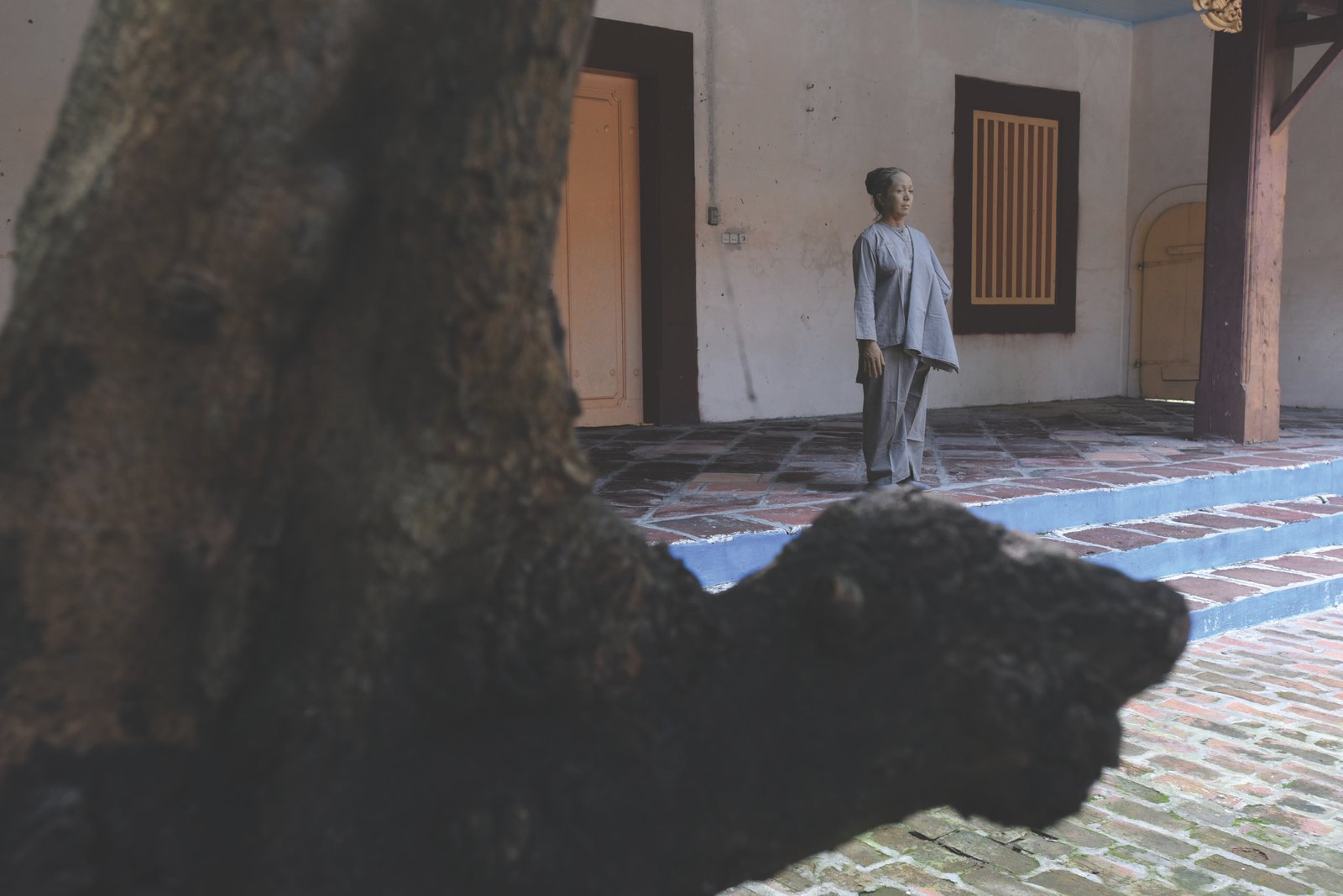
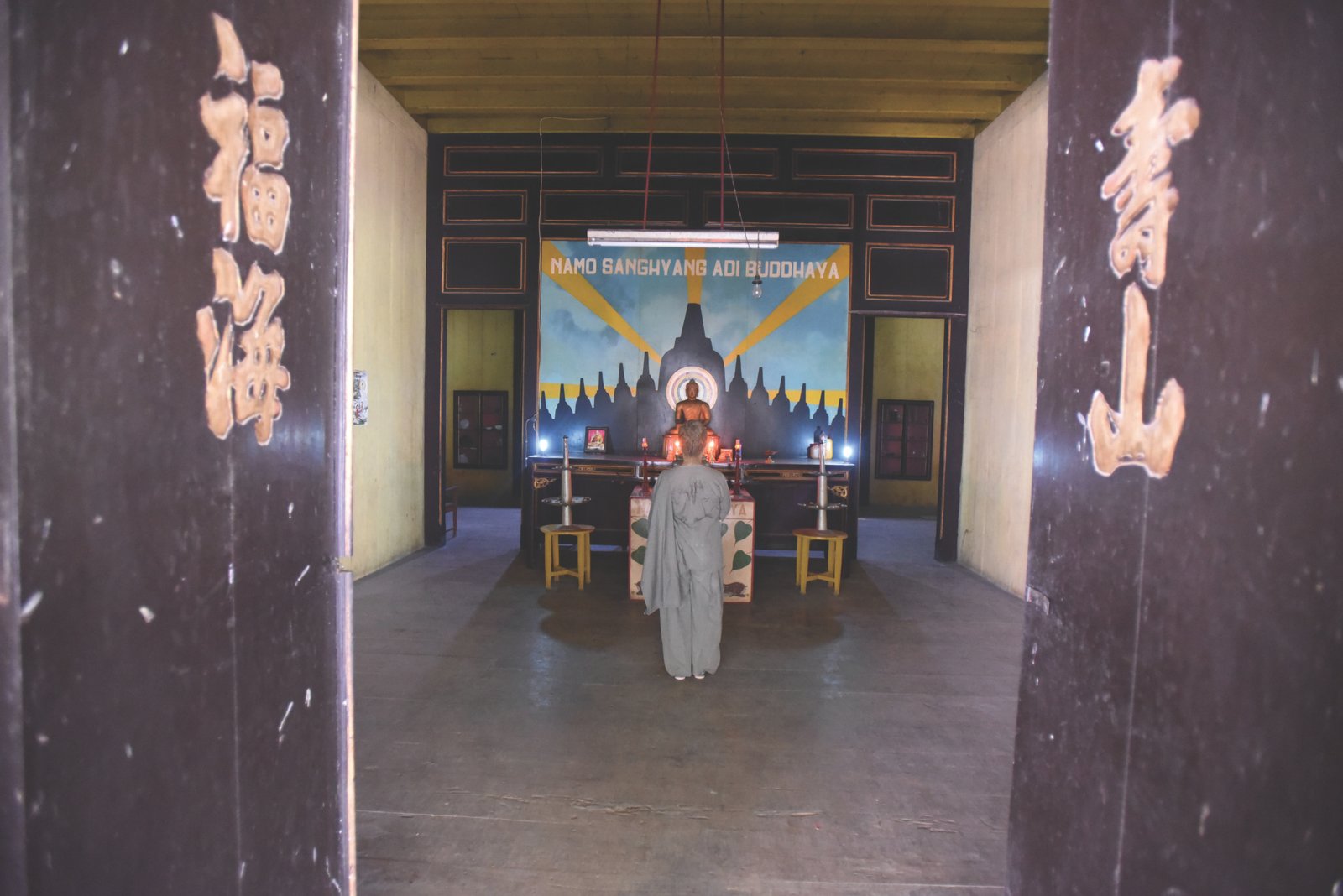
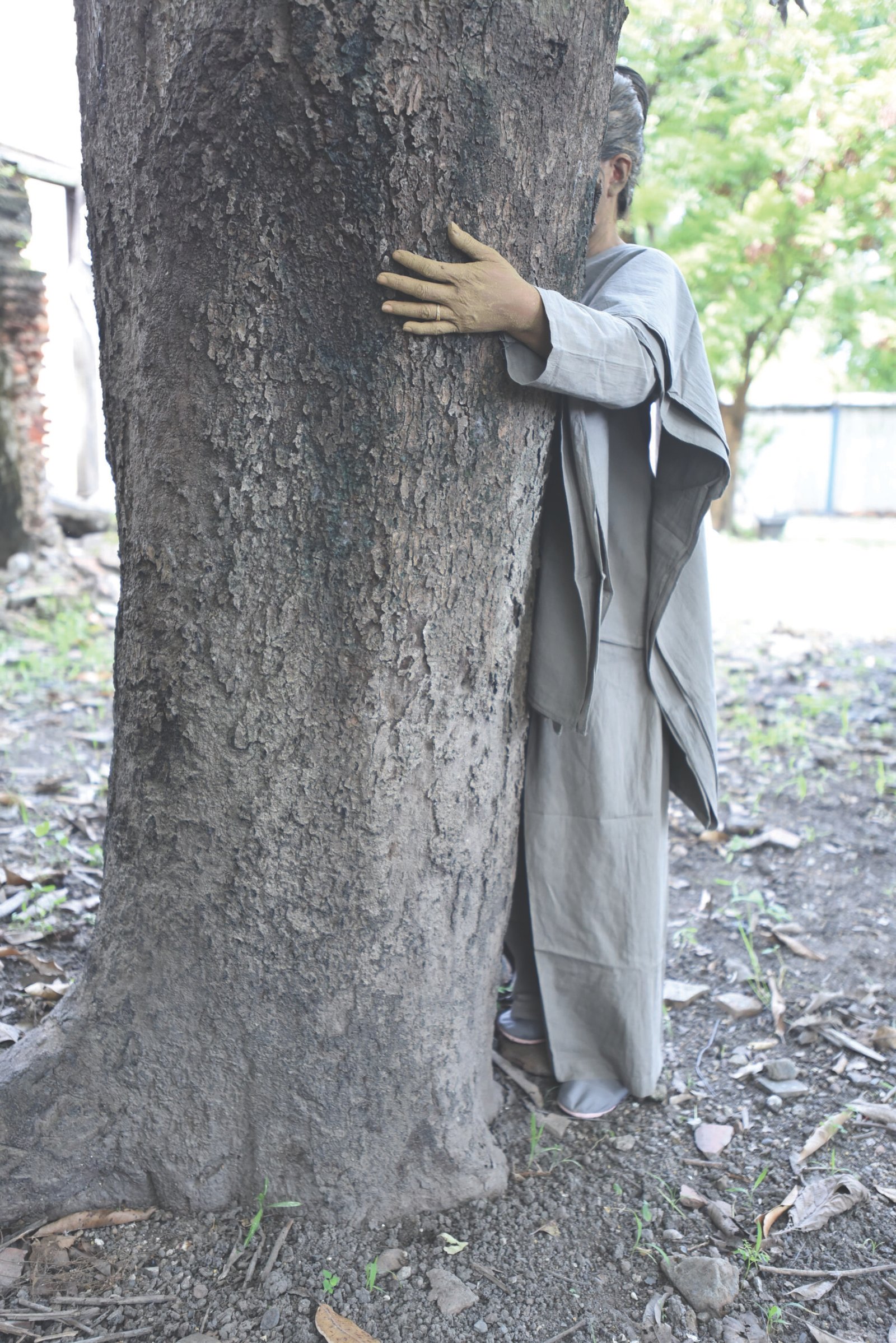
Arahmaiani’s performance work, Shadow of the Past, took place at the ‘Lawang Ombo’ Opium House, Karuna Dharma Monastery and Gambiran Street, Lasem. (Photos: Feri Latief).
Another side that is no less important and highly influential in shaping her ideas and thinking is her collaboration with scientists at the University of Passau in Germany, who have provided input on scientific developments, including their challenges, problems, and limitations. In addition, she collaborated with spiritual leaders of various faiths (Islam, Catholicism, Protestantism, Judaism, Hinduism, Buddhism) who, she says, have provided much input and stimulation, as well as an understanding of diverse religions, cultures, and “spiritual traditions.” Cutting-edge scientific discoveries that are “trans-disciplinary” have supported as facts that explain those spiritual teachings. This makes it possible for spiritual teachings to be understood in contemporary ways of thinking. Consequently, people can understand the principle of the “balance of feminine and masculine energy” and the need to counterbalance modern life, which tends to be material-oriented and treats everything as an object, placing women and minorities in secondary positions, as well as damaging the environment.
According to her, understanding history is very important in today’s context, as learning from the past helps overcome intolerance and hatred of the other that occur not only in Indonesia but also afflict global society today. She closely links this to the political divide-and-conquer games vigorously carried out by various parties pursuing power and money (patriarchal and dominated by men). How culture and religion are instrumentalised and create an atmosphere of hostility, where women and minorities are often targeted. Therefore, understanding and appreciation of differences or respect for diversity are needed. A lifestyle dominated by masculine and often materialistic energy has also contributed to environmental disasters. Nature, seen only as an object, becomes the target of greed and is destroyed indiscriminately, especially now that we are facing the phenomenon of armed conflict, which is causing damage to the environment and disrupting the social order. In ancient philosophy and indigenous cultures, nature is often depicted as female (as a representative of feminine energy). Indonesia is commonly referred to as Ibu Pertiwi—motherland, homeland, beloved homeland, the nation. A personification of the country Indonesia as one’s birthplace, homeland, or Mother Earth—Mater Terra.
Arahmaiani’s work is her reflection on today’s life full of problems and challenges on the planet earth threatened by ecological destruction, and on the suffering of the poor and marginalised in an unfair economic system that tends to be profit-oriented. She tries to imagine a brighter future for life and to change the misguided thinking that harms the earth. For Arahmaiani, Lasem in the work Shadow of the Past is an example and tangible proof of cultural acculturation between Chinese and local cultures (later termed peranakan culture). In Indonesia, the Chinese community are often targeted during political or economic crises. She encourages everyone not to be trapped in the power games of elite groups that tend to be deceitful and often sacrifice parties who are actually not involved, such as the Chinese minorities and other marginalised communities.
Terra reflections on the land where we live
The discourse on ‘terra’ for Chinese descendants or Peranakan in Indonesia, in general and in Lasem in particular, centres on the struggle for identity, the process of citizenship from the colonial era to the present, spiritual expression, community life, and the arts. For the Indonesian Chinese Peranakan, China is the land of their ancestors, interpreted as the place of their roots. From the 18th century to the present, the way they remember the land of their ancestors in the ‘new land’ is largely reflected in the architectural elements (town planning like the placement of the Mazu [Goddess of Sea], house orientation, and the connection to waterway) of their properties and the traditional culture they practice, which connects them to spirituality, their ancestors, and the land on which they stand.
Today, as a group that has lived in their territory for generations, not many Indonesian Chinese have ever set foot in their ancestral homeland. Most can only remember their ancestral homeland as an imagined terra seen in documentary clips on social media, Chinese films starring famous artists, Chinese dramas, Chinese songs, and now even Chinese short dramas.
Looking deeper, the diaspora is also related to the dynamic conditions of citizenship which involve many aspects. In the land where they adapt and survive, their struggle is not only about survival but also about shaping their outlook on life, including philosophy, society, and politics. Chinese Indonesians must constantly negotiate their identities as Indonesian Chinese, as Indonesians, and as members of a global community facing rapid technological, climate adaptive, and cultural shifts, as well as geopolitical shifts, all of which require continuous identity negotiation. Therefore, the concept of ‘terra’ will continue to evolve according to the contexts needed to respond to all changes.
I would like to show my gratitude to Cory Crossman, Baskoro Pop, Hakam Kurniawan, Febriyanti Suryaningsih, Nadia Purwestri, and Kusumaningdyah Nurul Handayani for the intensive discussions and valuable data provided on Chinese architectural elements in China and Indonesia.