
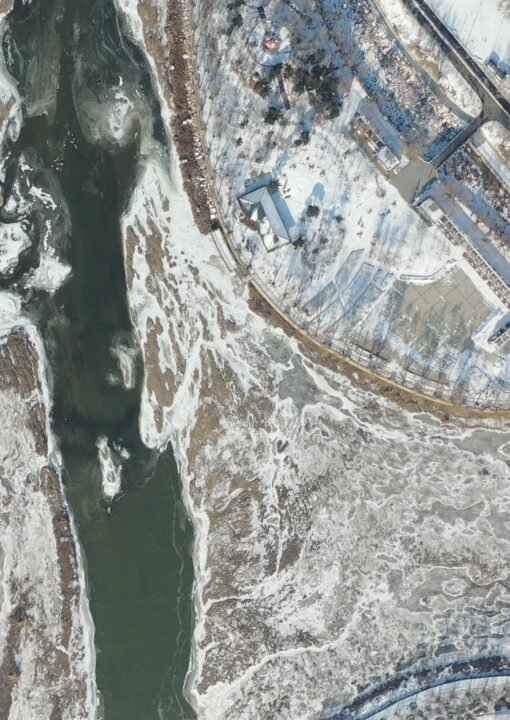
This conversation occurred in Yogyakarta, Indonesia, on 5 and 6 February 2026. The discussion aims to remain close to the participants’ comments within their vernacular expressions and has been edited for clarity where needed. The original transcription was considerably longer; the present form is a focussed rendition.
Opening
The conversation in Yogyakarta began from the word Terra, a term that immediately proved unstable. Terra could mean land, soil, earth, infrastructure, space, belonging, history, ancestry, livelihood, water, forest, nation, memory, body, spirit, archive and future. In Indonesia, and especially in Yogyakarta, these meanings do not sit apart from one another. They press upon each other through the realities of deforestation, tourism development, displacement, farming, indigeneity, race, gender, religious authority, art education, collectives, and the enduring work of artists who enter communities not as saviours but as listeners, witnesses, organisers and co-learners. The conversation unfolded across two days and was interrupted, in the most literal sense, by the tremors of an earthquake. That interruption mattered. It returned the idea of Terra to the body: to the ground beneath speech, to vulnerability, to the fact that the earth is not a backdrop for human discourse but a living, moving condition within which human culture takes form.
Relating to Terra
Venka Purushothaman
We have all read the brief on Terra, the theme we are looking at. Milenko and I were discussing why we would introduce an idea of land, space or ground now. It can mean many things in the world today, and land is highly problematic, perhaps more than ever before. We are in Indonesia, a country of islands, an archipelago where communities and islands function and respond differently. We also have landlocked countries primarily defined by postcolonialism, by decolonial practice, by the idea of the nation-state and by lines that were drawn. Today those lines are being problematised again.
Land is also infrastructure. What is an infrastructure? How does it put people together? How does the concept of land, which we think we own, structure the ground that we stand on? When I was writing the brief, I was careful to think that even the idea of Terra is in some ways Eurocentric. But the question is not whether the term itself is right or wrong. The question is how people define it, how communities translate it, and what it means to them.
We are sitting in Indonesia, in Yogyakarta.1 How Jogja responds to Terra may differ from Jakarta or Surakarta. Even within Java, the land changes distinctively. In preparing to come here, I was trying to understand how you might contextualise land as tanah, bumi, ulayat or ruang.2 There are multiple ways in which Terra is layered. The work that each of you does layers it further. It becomes contested terrain. Terra seems terrestrial, but it is always contested.
This conversation is not a critique of a Western idea. The question is one of translation. Sustainability, for instance, is a concept that advanced nations seem to own discursively. It is big in advanced nations, less so in developing countries. But water levels rise whether we like it or not. It is not an advanced nation problem; it is everyone’s problem. I am interested in the kinds of things that encourage the approaches you take in your art practice. What is the space you create? What is the Terra you create for your work to exist in? Your work is not isolated from the space it enters.
When you hear the word Terra, whether land, tanah, bumi or another term, what is the first image, memory or issue that appears to you? It could be cultural, political or simply an image.
Arahmaiani
It is a very important element in nature, in our reality, in what is happening. The land is somehow being destroyed. That is what is so scary and sad about the situation today. That is why I have been working with communities in many places in the world, to try to understand this problem. Of course, there is an educational aspect to this kind of activity, especially for the younger generation. It is also about connecting one community to another so they can support each other and collaborate. If we are serious about it, we need to collaborate. We do not need to compete.
I have also been working with lecturers and students from NUS (National University of Singapore), Singapore University of Social Sciences and the University of Melbourne. The students come here to Jogja to work with young people, because we need to work together to build this kind of summit. It gives a sense of hope when we come together, especially with the younger generation.
Milenko Prvački
What you mentioned about collaboration is important, and it is missing. I have many historical reasons to think about land, the connection between blood and land, and political and geographical ways of thinking about being part of land. People say, “This is my land,” and forget about collaboration. This is missing.
We are artists, and somehow we are activists, even if we are not applying our art directly. We have to think about this. There are too many sleeping people. By sleeping people, I mean people who are not active. They say, “It is not my job.” But it is everyone’s job. Collaboration ends up with artists, but we are a minority. Too many people are not active, do not care, and think someone else will do it.
This is not only about land or Terra. In politics generally, we end up with profit people because the majority is silent. Artists, political activists, democratic people, they are minorities. Then profit takes over and later people complain, “Look what they are doing to us.” But we did not do anything to stop it. The voice and collaboration are important because this is not an Indonesian syndrome. It is everywhere. Profit is supported by government, business and money.
Arahmaiani
I know, but I want to emphasise the situation here. It is getting worse nowadays. The new government is horrible.
FX Harsono
When I first got the invitation to talk about Terra, I thought Terra was land, soil or earth, and I felt my work did not have a connection with these issues. But when I started to read about Terra, I realised it is not only land. It is also space. So I began to think that Terra is related not only to people who live on land, but also to creatures, trees, water and everything.
Now, mostly in Indonesia, but not only in Indonesia, land is recorded by government and authority. They measure land. They give a price to land, in rupiah or dollars. Land becomes an object of the economy. Because land is an economic object, who plays with it, who occupies it? The people with money, the capitalists. And what happens to people on that land? What happens to trees, water and everything else? They become objects that can be moved, brought to another place, or removed.
In 1992, when I did research in Madura, I went to one village where three people had been killed by the military because they did not want to sell their land to the government. They were living near a big city, and the government wanted to make a dump. To make the dump, everyone in the village had to be moved. They said, “No, I do not want to sell my land.” When I asked them, “Why? What is the meaning of land for you?” one person said, “Land is my history. Land is my culture. My ancestor was buried in this land. If I move, where do I go when I want to make pilgrimage to my ancestors? During Eid al-Fitr, when people working in the big city return to the village, where must I go?”
For traditional people, land is different from what it is for people in the city. In the city, land is an asset that can be sold and bought again elsewhere. For people in the village, land is culture, history and ancestors. Land is not only soil.
Then there is the Chinese community. Chinese people came from China to Indonesia. They do not have land because they are not considered traditional or indigenous people. Chinese people live at the border between indigenous people and capitalism. If I want to survive, I must buy land. But one day, when people with more power and more money come, they can move me to another place.
In Yogyakarta, Chinese people cannot own land. They can buy land, but they do not get the certificate of ownership. They can stay, they can use it, but it is not their land.
Venka Purushothaman
Does that include people of Chinese descent who are born here?
FX Harsono
Yes. Even Chinese people whose ancestors were born in Jogja and have lived here for many years do not have the same right. Indian people too. Arabs can. There are two kinds of certificate. One means the land is your own land. The other means you can use this land for a house and live there, but it is not your land. You can sell, so profit is fine, but not the land. Basically, you can lease the land but not own the land. That is the model.
Milenko Prvački
You can sell, so profit is fine, but not the land.
Venka Purushothaman
Basically, you can lease the land but not own the land. That is the model.
Milenko Prvački
I am interested in how they justify this based on race.
This is very dangerous. I mentioned blood and land. It is a political idea that becomes nationalistic and chauvinistic. My country, Yugoslavia, disappeared within a few years, split into seven countries. We spoke the same language but because of differences we could not collaborate or link together. This is the Hitler side of blood and land, the idea of special race. It is dangerous because to activate these differences, you need one match. Politicians know how to do this.
FX Harsono
A lot of Chinese people in Jogja sued the local government in the high court in Jakarta, but they lost because Jogja is a special region with its own law.
Venka Purushothaman
Is it also because Jogja was historically where the Kraton, the palace and the capital were, and therefore had special privilege?
FX Harsono
Perhaps, but now I have a house here because my wife is indigenous. In some areas it is easier. In other areas, if they ask for the marriage certificate, then they know, “Your husband is Chinese, you cannot have land.” So the situation differs between Bantul, Kulon Progo and other districts.
Venka Purushothaman
Anang, what is your understanding of Terra as a younger artist, and how do you respond to what you have just heard?
Anang Saptoto
I started learning about land, community and environment when I studied at two art universities, one in graphic design and the other in television. At that time, I tried to use my capacity to support and help communities. Sometimes friends from history, forestry or biology departments made research and needed help from design, photography or video. I tried to support them.
When I followed these activities, I came across problems about land. Sometimes one village changes because the government and companies need to make a new tourism area, cut the mountain and build a resort or hotel. There is also the new airport in Jogja. When you arrive there, that big airport was built where five villages were demolished. I remember the old airport. During that time, I followed the community and tried to support them. For me, it was not about making artwork but supporting them with artistic practice.
When people wanted to show something to the human rights association in Indonesia, they needed pictures as proof. I tried to help by making documentation. When they wanted to make a presentation about the situation, I helped make graphic information. I learned from the context, not only in one place, but from many problems in Jogja, in villages and in the city.
Between 2012 and 2016, 649 hotels were built in the Special Region of Yogyakarta, and 104 new hotels were added in the city of Yogyakarta during the administration of former Yogyakarta Mayor Haryadi Suyuti. In the old days, Jogja was a student city. Now it is a tourism city. All the love, all the targets, all the vision go in one line: make a new airport, make a big road, cut the mountain, build the hotel, build the resort. If you go to the beach or the Gunung Kidul area, you see big roads and good roads. They are not for the local people. They are for tourists to go easily to the tourism area.
I learn with the community. Sometimes when I look at photographs in my computer, I have ideas to make something. In one area, more than 700 coconut trees were cut to clear the land. We sold the coconuts. I tried to photograph each coconut, one by one, when we brought them to the city to sell. I did not know then whether it was artwork or not, but I needed to keep the photographs. After the situation was broken and finished, I made a memory from it. I had more than 300 coconut photographs. The title to the work is The Last Coconut from Sidoarjo. When I saw the coconut, the wood or the animal, it was not only object. When I see land, it is not only soil. It is life, identity, something like that. People are not easy to move from their homes. When you stay in one place, and your grandmother and her grandmother stayed there, you do not want to move. You do not only stay; you have a complex life there. That is why people are angry and say to the government, “No, do not change this land.” It is not about land only. It is about identity.
Land, Belonging and Extraction
Venka Purushothaman
What is coming through strongly is the complexity of Terra. Land is acquisitive and extractive when it is defined only by ownership and by who can claim ownership. The idea of the indigene is being redefined through ownership: who owns, who belongs, and who inherits. If tourists come into a space and occupy it, do they begin to inherit the site? Do they become indigenous to it? That is a very troubling but interesting narrative.
Arahmaiani
I want to add something about the pollution of soil and land. During the military regime, beginning in 1965, the farming system changed. There was a project called the Green Revolution.3 The government introduced pesticides and GMO seeds to farmers. This came from the United States, and it is still ongoing until today. You can imagine what has happened to our planet. It is political. There are people trying to fight against it, but until today the government is still working with Monsanto.4 This company comes to make profit.
Anang Saptoto
I do not know why government and companies always see the land like this. For example, when they see farming land, they think this land can make more growth, more profit. They do not see that this land has farmers and farming activity, that people live from this practice. That is why programmes from government, like new airports, hotels and resorts, always go to farming areas.
Before the new airport, the Sultan asked the Centre for Transportation and Logistic Studies at Gadjah Mada University to research five alternative sites: Bantul, Kulon Progo, Mungkid, Sleman and Jogja city. I went to the presentation. All five areas had recommendations. But only Temon village in Kulon Progo had a big farming area. Sleman had many houses and city areas. So the farming area became the danger zone. Farming is always in a dangerous situation now because companies and government choose farming areas for new projects and housing.
Milenko Prvački
Because they think the land is empty. They think rice fields are empty. But if you dislocate farmers into the city, they lose everything. They cannot adapt easily. They lose history, knowledge and continuity.
Arahmaiani
There is a new regulation. Even if you own a piece of land, if you do not use it for five years, the government can take it.
Venka Purushothaman
Ownership is one thing; farming is another. Farming has been traditional and continues from generation to generation. Are younger farmers wanting to continue that tradition and modernise farming?
Arahmaiani
From what I have learned, the new system that began with the Green Revolution under the military regime made many young people not want to become farmers anymore. They do not see farming as beneficial or successful. Many young people from villages want to go to the city or abroad to earn money.
Venka Purushothaman
So the ground functions in different ways. Land is an asset. Land is an ownership claim. Land is something to toil and work. At the same time, there is ancestral land. These meanings are shifting. Can artists today collaborate with the powers that be and become co-authors of the destiny of land? Is there space for that?
Arahmaiani
Yes. From my experience working with communities in village areas and urban areas, there are cases where we can do it. When we are together, we become strong. Then it becomes possible. I can take you to communities that have made projects, made change and brought people together. I have worked with them for many years in Yogyakarta, Bali and other countries. Art is a very interesting and flexible medium.
Venka Purushothaman
Art has activation. It is an important dimension. There is a political awareness in Indonesia that is very strong, and it is not only being against politics. It is a sense of care for land, space and world. That relationship is powerful and distinctive. In the Riau Islands, for the Orang Laut, water is land. Land is not only soil. It is the care for water, for sustenance, for what holds life.
Milenko Prvački
There is no difference between taking my land and taking my water.
Venka Purushothaman
That is also the battle in the South China Sea. I am interested in your activation. How do you activate and work through communities as part of your practice?
FX Harsono
Until now, I have not worked deeply on land issues. My focus is Chinese identity. But I know the problem of Chinese people with land in Indonesia because they are not considered indigenous. Most Chinese people do not have a problem buying a house, because many have money, but some are very poor and cannot buy land.
Arahmaiani
About Chinese identity, there is also the Peranakan situation. One of my ancestors is Chinese. Peranakan means Chinese mixed with local people. The situation can be slightly different because it is connected to the local. My daughter is an expert on this heritage. She opened a museum in Lasem, the oldest Chinese Peranakan city in Indonesia, on the north coast of Central Java.
In this situation, there are differences between groups. My grandmother from my father’s side became Muslim because she married a local. She still produced Chinese kebaya, Peranakan kebaya, using batik from Lasem. When we talk about Chinese in Indonesia, there is not only one situation. Since colonial times, Chinese people have become targets in moments of economic or political crisis. The people in power do not want to be blamed, so they say the Chinese are the problem.
During the New Order,5 the government used the term Cina. After the Reformasi6 era, the term Tionghoa became more polite. Now the younger generation says Cindu, from China and Indonesia. The word does not carry the same trauma from the Old Order or New Order. They say, “I am Cindu.”
Venka Purushothaman
This is about the younger generation taking ownership and redefining themselves as a community, separating themselves from the politics of organisation and state naming. That connects to what I wanted to call Terra Synthetica: the embodied space in the digital sphere, where a new order is being redefined, not following the same borders or nation-state ideas.
Art as Activation and Care
Venka Purushothaman
I want to circle back to the place of art. Art can be a powerful form of facilitation to help define culture for communities. There is always the risk that people say, here comes the activist, not the artist. But all of you do not move away from the fact that existentially you are artists. At the core, you go to that space. What is the place of art in the communities you enter?
FX Harsono
The word activism in Indonesia is very common, especially during the New Order era. If an artist worked in social and political areas, with people, politicians or activists, people said this artist was an activist. Now the definition is wider.
Arahmaiani
In my art practice, I use various media and support an interdisciplinary approach. I put art in connection with other disciplines. Creativity is not only related to art. Creativity is a human potential in exploring every discipline and possibility. It is challenging. In the beginning, my practice was considered the practice of a crazy person. Art became strange. I was even in prison during the military regime, after I came out from art school.
Venka Purushothaman
When were you in prison?
Arahmaiani
In 1983. Luckily, it was only about one and a half months. During that time, if you were taken to a military place, you could disappear. Perhaps they suspected me as someone crazy or thought someone controlled me from behind. They interrogated me day and night, trying to find my connections. I met another activist but he was actually a spy. He got a letter from a military doctor stating that I was mentally disturbed. So they released me, but the consequence was that I was kicked out of art school.
I had to escape again. Australia opened a way for me, and friends there helped. From these experiences, I saw more and more possibilities in using art media to bring up issues related to life challenges. Usually, when we talk about social and political issues, meetings can become boring. But when we use art, it becomes fun, exciting. People in the community become enthusiastic. They perform together.
If you have seen my flag project, it is a community-based art project. I perform with community members. The flags carry keywords from the community, ideas from their concerns and what is important to them. Then I design the flag with those keywords. From this experience I learned that art as a medium is flexible and useful in real life. It can bring people together because it makes them happy.
Venka Purushothaman
You said you escaped to Australia. How was the return? You have two exits and entries.
[…] Do art schools teach your work now?
Anang Saptoto
In my master’s study, sometimes yes. We saw exhibitions of Arahmaiani’s work. But in the bachelor’s degree, I think not. The bachelor’s at the art institute is more technical than theoretical.
FX Harsono
Even the New Art Movement, which is very important for contemporary art in Indonesia, is not properly taught in universities.
Arahmaiani
In the last few years, I have been invited as guest lecturer at ISI, Gadjah Mada University, Sanata Dharma, Atma Jaya and even ITB, the school that kicked me out. They invited me because they want to implement transdisciplinary or interdisciplinary approaches and work with people. I laughed when ITB invited me.
Venka Purushothaman
We had a similar conversation with Rirkrit7 in Chiang Mai. He said art schools do not teach what he does, even though he goes in regularly. They invite him as a celebrity, but his work is not really taught. Anang, how do you shape your own way of engaging with contemporary issues as a younger artist coming through the education system?
Anang Saptoto
I started a project in 2020 during COVID, after the airport was built. I asked why problems about land only become loud when the problem is almost finished. The airport issue began around 2009 or 2010, but people became loud in 2017 when the President and Sultan had already signed. Why do we always make a voice at the final moment? Maybe we need to do something before the crisis.
I started from farm and food issues. My project is Panen Apa Hari Ini, or What Harvest Today? It explores relationships with women farmer groups in the city and village. In the area near the airport, I made a map with women farmers, showing their strategies of struggle: one person farms, one person has a small chicken egg business, one person has fish, and so on. Until now, I have collaborated with more than eighty-five groups in Jogja. Every month, I invite a group of women farmers to introduce themselves and talk about their group’s activities on a live broadcast on Radio Republik Indonesia Pro 1 Jogja. Also every month, I bring a group of women farmers to Community Market Pasar Wiguna. They farm, but they also make products, cakes and food to sell.
My new project is a forest in the city. Near my studio, we rent land and planted five hundred trees originally from Java. In the beginning they were one metre tall. Now, after more than a year, the forest is bigger. I realised that when we talk about land and human rights, it is not only about humans. Many animals are included: foxes, butterflies, birds. Making a forest is not only planting trees. It is making space for animals, maybe also for ghosts.
Venka Purushothaman
How long have you leased the land?
Anang Saptoto
Every year we pay. The land was like nobody was taking it. I told nearby schools, you can use my forest like your land. I also set up libraries for children in villages and cities, for example through Indonesian Contemporary Art and Design in Jakarta, Indonesia. We established a library for children and the farming community in the Pelangi area, in Pela Mampang, Jakarta. When a library is ready, I launch it and give it to local government and local people. The books come from donations. In the murals and construction, I collaborate with art and architecture departments. Every project is not made by me alone. Like Arahmaiani said, it is collaboration. My idea is not something I can make by myself.
Venka Purushothaman
Your presentation raises the question of responsibility. Who is responsible for the environment, community and different stakeholders? When I asked about the land lease, you said it is yearly, but someone will ultimately determine the asset. The work you do gives voice to people who cannot speak. You enter communities without announcing, “This is art.” There is an organic, iterative, collaborative and inquisitive quality. How does the community respond? Does the community become method or material, or do they become co-creators?
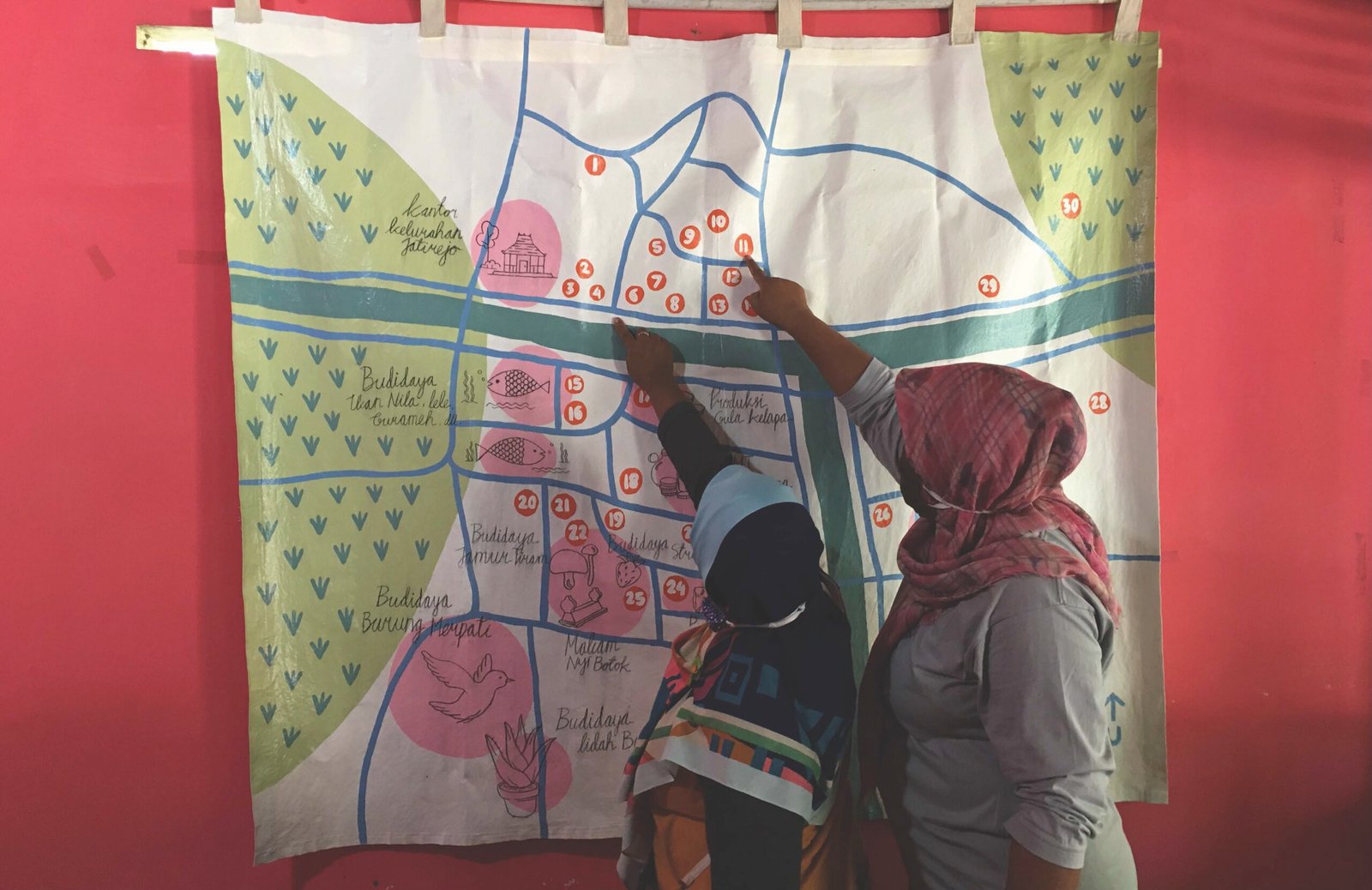
Panen Apa Hari Ini (Pari) has been working with 75 farmer groups in Yogyakarta City from 2020 to the present. Photo: Anang Saptoto
Anang Saptoto
After four years working with women farmer groups, I have one person in Kotagede, Ibu Rismindarsih from Melati Green Community Farm. She is over eighty. She used to run an alternative school for people who dropped out and needed certification. Last year she closed the school because she was tired and older. She told me, “Anang, you can use my house, up to you. You can make activities and think later what kind.”
I worked with her from 2020 until now. I know the village, the community and the local people. Many universities, artists and communities come to experiment with the community, but sometimes the artist comes only as momentum, not sustainability. If they want, they come. If not, they leave. I wanted to make a sustained common ground. So we are launching a space in Kotagede called Ibu Rismindarsih Gallery, named after her. It is not only for artists. It is for any person or community who wants to make a presentation, exhibition or workshop. If they want to make it more artistic, we help with display or decoration. That is one impact. If you continue working together, people begin to believe you. Sometimes surprise comes during the process.
FX Harsono
In Indonesia, artists who work as activists usually have no organisation or government support. They work by themselves. This is natural for artists. Understanding between artists and community is important and organic. During the New Order, when I was an activist against government policies that repressed people, I worked with other activists so people could understand. Until now, I work like that. Now I work with many Chinese communities, historians and people in politics. I am asked to write and speak. Routledge invited me to write about my research on the Chinese massacre of 1948 because there is no information in Indonesian history about it. Gadjah Mada University invited me to give a seminar. Melbourne University also invited me to contribute to a book on politics in Southeast Asia. Artists often work by themselves because there is no support.
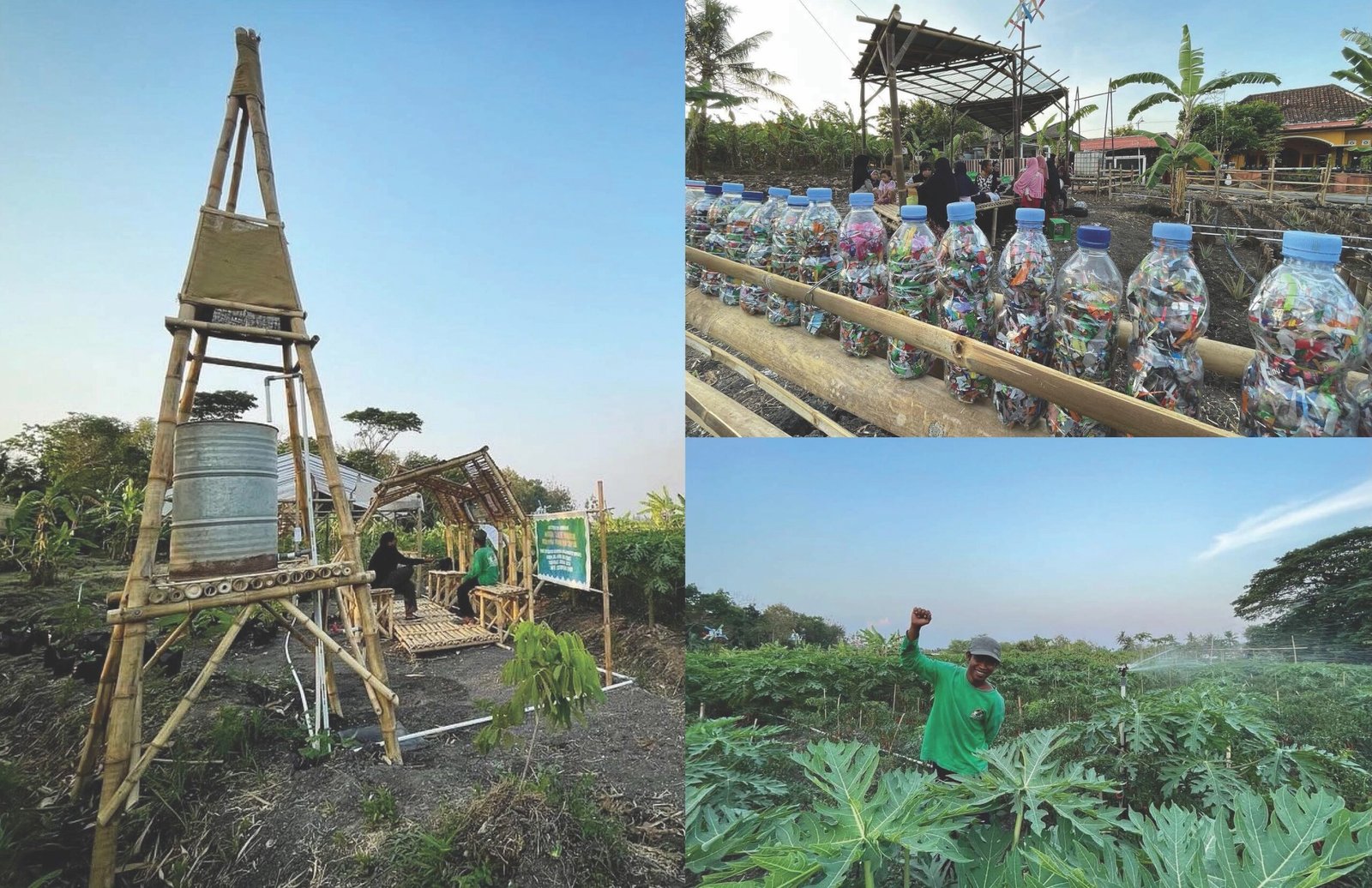
Installation of Panen Apa Hari Ini (Pari) at the Jogja Biennale 2024 exhibition, Bangunjiwo, Yogyakarta, Indonesia. Photo: Anang Saptoto
Arahmaiani
There are challenges, but community-based projects make it easier for people to find solutions because they can support each other. You do not feel desperate and alone. My work started in 2005 in Thailand, with minority Muslims and majority Buddhists during a very problematic time. Some Muslims were killed, and the problem continues today. I tried to bring Buddhist and Muslim groups together, and to connect them through environmental issues, because everyone recognises that the environment is important.
I have also worked with women environmental activists in Israel and Palestine. Before the war, I was invited to Israel and exhibited in Haifa. My role often becomes a bridge between conflicting societies. We focussed on environmental issues because that can bring people together. Unfortunately, when war starts, we cannot do anything. I have worked in Singapore, Malaysia, Thailand, China, Turkey, the Netherlands, Germany, Czech Republic, Australia, Canada and the United States. It is challenging, but it gives me hope.
Power, Mediation and Community
Venka Purushothaman
Following yesterday’s earthquake tremor, we were grounded very significantly. For us coming from Singapore, it is a big deal. For you, perhaps it is a lived reality. We established that Terra is not neutral. It is always negotiated. You enter a space, whether building a forest or working with communities, and negotiation is always present. Space is not free. It is not something you occupy and then move on.
Everything becomes an asset, something codified within a register or system. If it is not codified, who owns it? How do we look honestly at the land we live on, without making it a spectacle or claiming it? History is full of claims: people claim Greenland, claim islands, claim territories. I am interested in power and how artists negotiate power. Your work involves evidence, documentation and archives. What is your take on power when you enter community spaces?
Milenko Prvački
Historically, territory has always changed by power. My country disappeared. On a trip to Turkey, I ended up in Troy, where a hill shows layers of different civilisations. I realised that history is about civilisations and territories changing. Sometimes it takes three thousand years; sometimes two hundred. Now, if you wait for a flight to Yogyakarta, maybe one country will be wrecked.
We thought we had become civil society, but now we are again in a situation where power says, “We have tanks, so shut up.” Stalin used that argument. Today it may not be tanks only; it is other forms of power. But land, identity and culture are always involved. When we lose land, we lose many things.
Arahmaiani
Power is important to be aware of because it is often manipulated. I was born and grew up during the military regime in Indonesia. I learned how power can become scary. I tried to fight it and become critical, but the impact was prison or death threats. I began to think about how to deal with power because we cannot deny that it exists. We can fight it, but the result can be imprisonment or death.
Milenko Prvački
Power is about interest. People want power to realise things that they should not be able to realise in a normal situation. They keep power not because they hate you or me, but because they need to execute what they want: demolish beaches, demolish forests, make property. Again, we have a problem with silent people. You activate groups, but the majority is silent. They are afraid or they are bought with little money, jobs, oil or sugar.
Venka Purushothaman
When you deal with communities, how do you remind them of their own power?
Arahmaiani
The community has to be educated about the present situation and its negative impact on environment and social life. But this is also connected to forgotten cultural heritage. From my work with indigenous groups around the world, I have learned that many ancestral cultures understand how we are connected to nature. We are not owners who can exploit nature. We are part of it. Respect for nature is a basic principle. Another is compassion or love. You can find it in every ancient cultural principle. Modern people need to realise that we have these civilised, human principles. After people become aware, they can work together and make concrete action.
Venka Purushothaman
How does the power structure work in your experience?
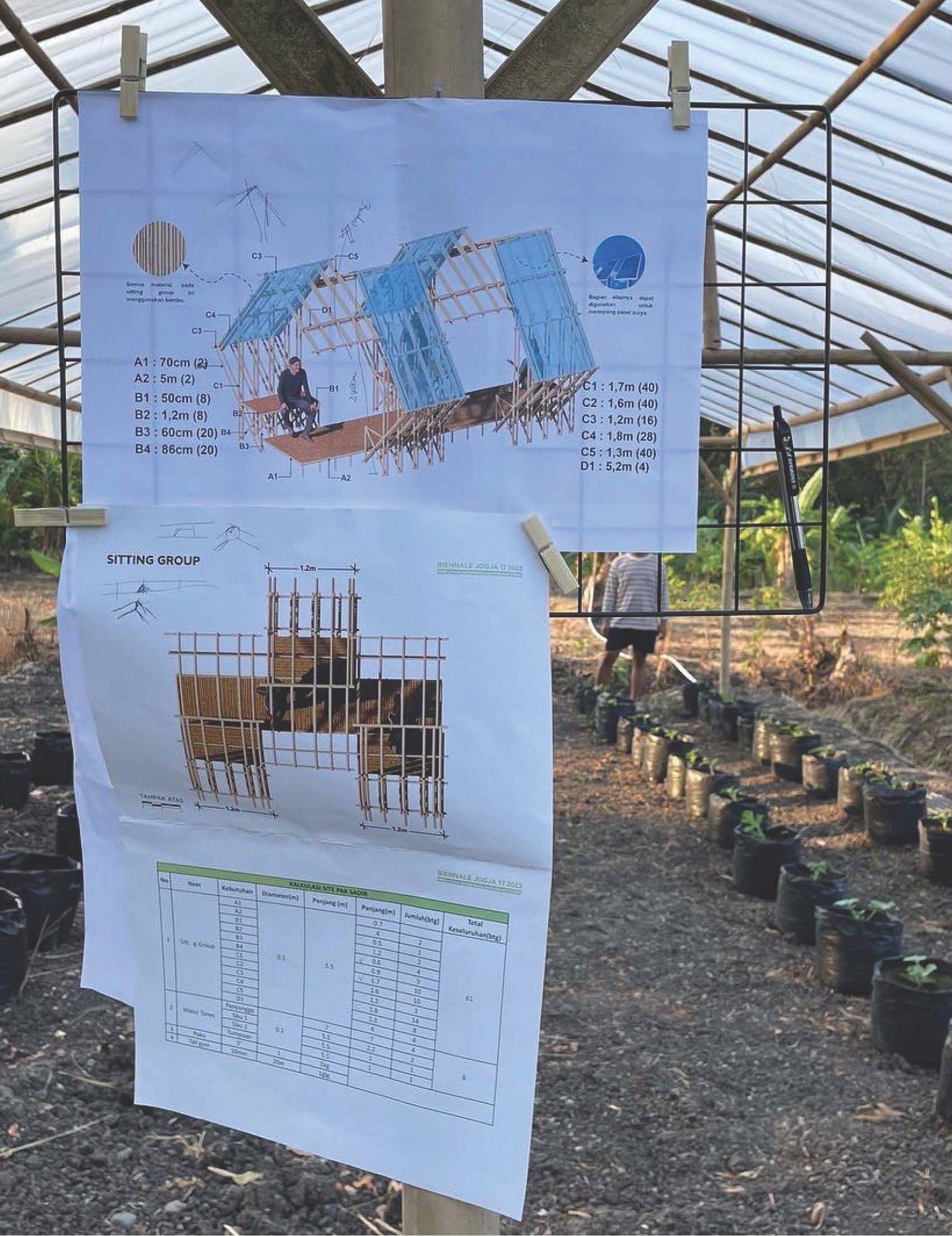
Sketches and designs for agricultural land created by Panen Apa Hari Ini (Pari) and the Collaborative Village Architecture Forum (FAKK) at the Jogja Biennale 2024. Exhibition in Bangunjiwo Village, Yogyakarta. Photo: Anang Saptoto
FX Harsono
Usually power thinks in terms of buying. They say development will make people’s lives better. But they do not think about culture. As I said, in rural traditional land, people do not think land is only a space with economic value. Land is history and ancestor.
Venka Purushothaman
That is a less discussed aspect of Southeast Asia: women form a parallel economy. You see it in Malaysia and Indonesia. They generate an economy through homes and communities. It is not documented in the way capitalist structures document business. It continues to operate at another level. It is organic, fluid, regenerative and sustaining. Even in war or challenge, this economy continues because it does not follow capitalist rules. That is a beautiful allegory to Terra.
Arahmaiani
In the tradition of Nusantara, the position of women is equal to men. The man is not superior. I had a very interesting experience in a monastery in India. They put me in the monks’ monastery. I asked my guru, “Does this mean I was a man in a past life?” He smiled and said the logic is simple. What connects you with the lineage is your spirit, your way of thinking and what you are doing. The form of the body is not so important. It can be male, female or mixed. That is a deep understanding.
Venka Purushothaman
That fluidity exists in South Asian traditions before colonialism categorised it. In parts of South Asia, documentation still allows third gender. Southeast Asia too has these systems. What matters is how we sustain them when the so-called world order changes.
Anang Saptoto
When I first worked with women farmers in 2020, during the pandemic, one mother invited me to her house on a Wednesday. I went there and was surprised because they had their regular monthly meeting. I met thirty women in one room, and I was the only man. I asked if I could visit their homes one by one. Every Wednesday I went to Kulon Progo near the airport area. In one day, I visited three or four houses. I photographed the building, activity, family and portraits.
Venka Purushothaman
Who else do you work with to achieve your engagement?
Anang Saptoto
Only me and the women farmer groups.
Arahmaiani
I work with various groups, including businesspeople, and I do not mind working with government if they support the community. In Tibet, the Chinese government finally supported the project. We preserved water sources, managed trash, recycled, revived organic farming, planted trees and created alternative energy systems. Since 2015, the Chinese government has supported it and the project has expanded. If people in power want to join to empower the community, I do not mind.
Venka Purushothaman
What is the place of museums, curators and art historians in this work? Do they come in at the beginning or only at the end when there is something to show?
FX Harsono
When I need research and will make a work, curators sometimes come with me to the field where people were massacred. Historians also help. Not galleries, but curators who want to write about the work. Now I am trying to make a book about my research.
Arahmaiani
I have been invited by museums in many places. In Singapore, some works are collected by Singapore Art Museum and National Gallery Singapore. Also in Australia, Thailand and Europe. Now younger curators in museums are doing research and following the process. National Gallery curators have worked with me for years. They are coming to Jogja to interview and film a documentary about my activities with communities and in my studio.
There is also an exhibition at Tate Modern in London. They showed my work related to 1998, when the military regime fell. I recreated the artwork because they are collecting it. It was exhibited for one year and they wanted to continue showing it because the work relates to what is happening today, with the military returning to power in my country. I appreciate that the museum is not only collecting for its own benefit but relating to the situation.
Sometimes we need a kind of privilege to get a way into museums. If there is no privilege, people may not see it as good artwork. But if you receive a grant from Prince Claus, British Council or UN-Habitat, people say, “This is a good project.” That was not my target, but it happens.
[…] In Indonesia, accusing someone of communism remains a strategy used by elites. When I work with community, another powerful position that needs to be negotiated is the priest: Muslim, Christian, Hindu, Buddhist. When we can work with priests and communicate openly, they support the community. This is important because people in Indonesia still have strong religious belief. If we want to empower people, we also have to negotiate with religious authority.
Venka Purushothaman
The intermediary becomes important because the priest can take away the sting of being framed as socialist or communist. The intermediary mediates the challenge.
FX Harsono
When I did research in Jepara, where the government planned a nuclear power plant, outsiders were not allowed into the area. Someone introduced me to a Christian priest with social authority. I went with him, and because I was with the priest, I could enter. So, yes, I have some trauma about government.
Learning Outside the Institution
Venka Purushothaman
In Indonesia, educational institutions, universities and art colleges have often been centres for community-based engagement. How are they now?
FX Harsono
In the art school in Jogja, there are lecturers connected to a banned Muslim organisation. In some universities, the government has removed people connected to such groups. But in the art school, they remain. One teaches painting and says students cannot paint people or animals. Then the university moved him to teach theory, aesthetics. Aesthetics is a strategic place to talk about ideology.
Arahmaiani
It depends on who holds power in the institution. I have also been invited as guest lecturer by progressive lecturers who want students to learn about community practice, critical ideas and working against domination. Some lecturers are open-minded.
FX Harsono
They are a minority and do not have power. People with different ideas rarely get positions to change decisions.
Arahmaiani
But as lecturers, they still have power with students. They can teach them to be aware of the situation.
FX Harsono
Jakarta collectives are different from Jogja collectives. Jakarta is geographically big, so a collective in South Jakarta does not easily work with one in North Jakarta. They become more exclusive. In Jogja, collectives are open to exchange, work together and collaborate.
Venka Purushothaman
That is one richness of Indonesia. Collectives become new economies of education, engagement, collaboration and space. They do not need to enter another space to function.
[…] When Ruangrupa8 curated Documenta, it elevated collective artistic practice globally. Leaving aside the politics, did that change the landscape in Indonesia?
FX Harsono
No. Before Ruangrupa used lumbung9 as a concept for Documenta, we in Jogja were already doing that.
Venka Purushothaman
I agree. The practice was already here, but the world began to see it.
Milenko Prvački
The lack of good art education is one reason collectives work. They offer what official curricula do not. Art develops, but schools often continue to teach outdated things. Young people are smart. They are not satisfied.
Arahmaiani
In Bandung, there were fewer collectives, but now there are changes. Younger lecturers at ITB have invited me as guest lecturer, even though I was once kicked out. They want to change the system of education. Communities outside ITB, in places like Cicalengka and Majalengka, are also creating activities with local people, activists and academics. I am invited to share experience on how to develop community-based systems.
FX Harsono
Bandung’s education comes from Western modernist tradition, so artists work in studios. To change that mentality is not easy. In Jogja, since the 1960s, artists have worked based on community. Bandung artists often have strong concepts behind artwork. Jogja artists have another kind of community relation. Near Bandung, Jatiwangi Art Factory is a strong collective in a village. It is very interesting.
Venka Purushothaman
Anang, what is your experience of education?
[…] What is the artist doing right that the university is not doing?
Anang Saptoto
The idea becomes creative. I believe it. All proposals I helped were approved.
FX Harsono
I taught for 23 years: fifteen years at Jakarta Institute of Arts and eight years at Universitas Pelita Harapan. That is why I do not want to teach in a formal school now. I know the curriculum and how the formal school works.
Anang Saptoto
Now if I have a project and need architecture practice, I call a friend who lectures in architecture. He gives me twenty students to collaborate. It is easy.
Forests, Archives and Future Terra
Venka Purushothaman
Coming back to land, what is one urgent thing that is not being addressed today by governments, people or systems? What are we missing in the twenty-first century in dealing with Terra?
Arahmaiani
The modern capitalist system pushes people toward mining, palm oil and plantations because owners of companies make big profits. But the environment and land are destroyed. Many young people no longer want to become farmers. Land is abandoned and later becomes villas for tourism, resorts or other projects. This is happening in Indonesia and elsewhere.
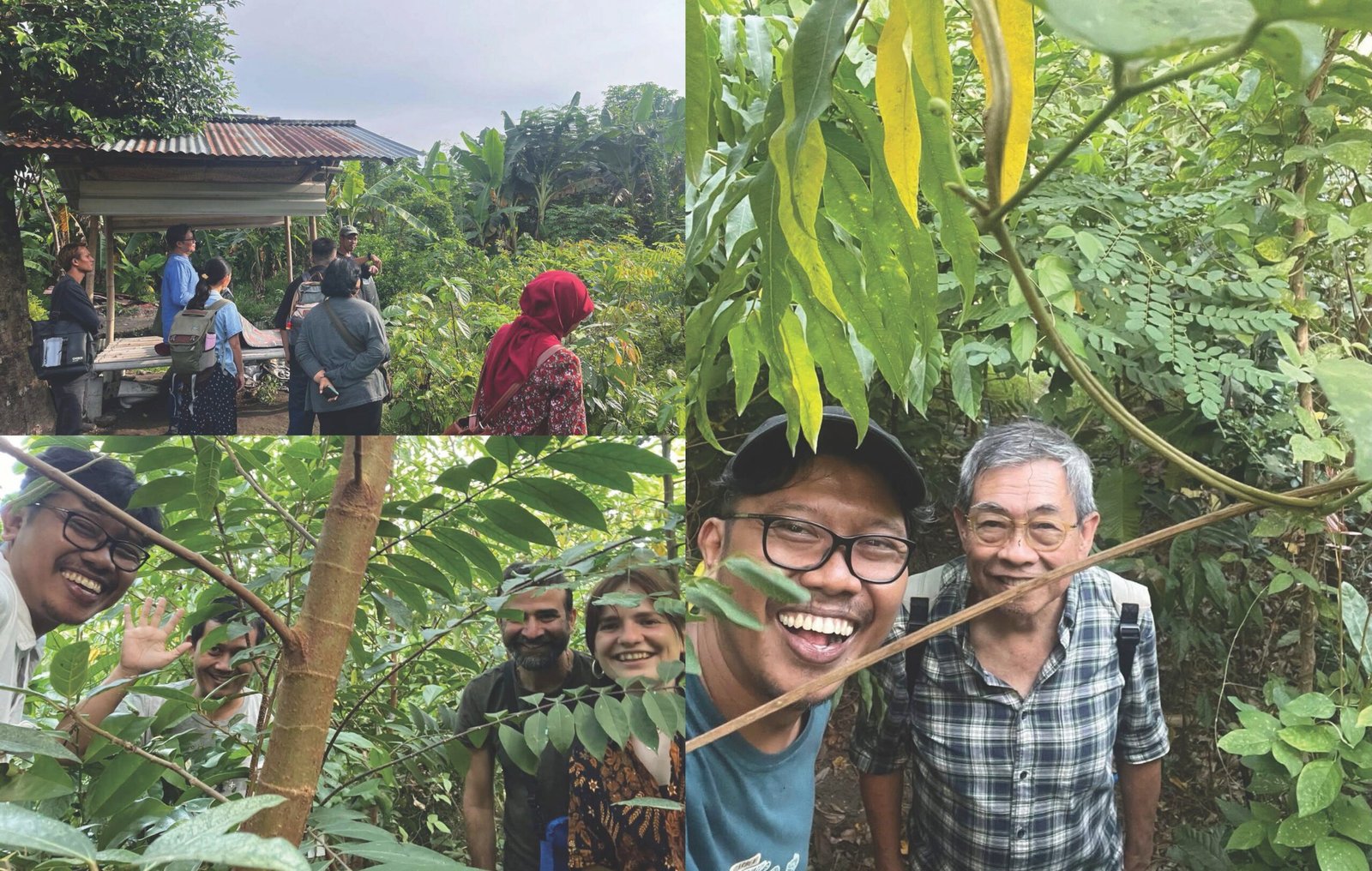
Wana Nagara utilising the forest as a studio and source of knowledge. Photo: Anang Saptoto
Milenko Prvački
In Europe agriculture is also dying because it is not supported. Governments think building on land brings more profit. Food can be imported from countries that have no choice but agriculture, oil or other extraction.
Arahmaiani
One example I have been doing with artists and activists is Komunitas Wayang Merdeka. It focusses on wayang, puppets, related to traditional culture and philosophy but is also connected to environmental problems today. It educates young people and children. We have done this for three years. Children become happy and enthusiastic, but they also learn serious things about the environment and social situation. We are coming to Singapore, invited by NUS, to do workshops with young people and perhaps children.
For me, the missing issue is how to think not only human for human. In Indonesia, many problems happen because we think only about humans. We do not think about human and animal, human and nature. We cut trees easily because we do not have knowledge about those trees. Government builds highways and cuts trees without thinking that a tree may have grown for one hundred years.
That is why my friend Kurniawan Adi Saputro, or Inong, and I made a little forest and shared knowledge about trees. In the beginning people did not believe it. Even the person selling tree seeds asked, “Why do you buy this tree? It is rare; nobody buys it.” We bought rare historical trees from Java because we wanted to show them to the public again. After five or six months, and then one year, village leaders near my studio saw the forest and began to understand. They said, “I know this tree. My grandmother had this tree.” Now the district leader is appreciative and tells government meetings that we have a forest.
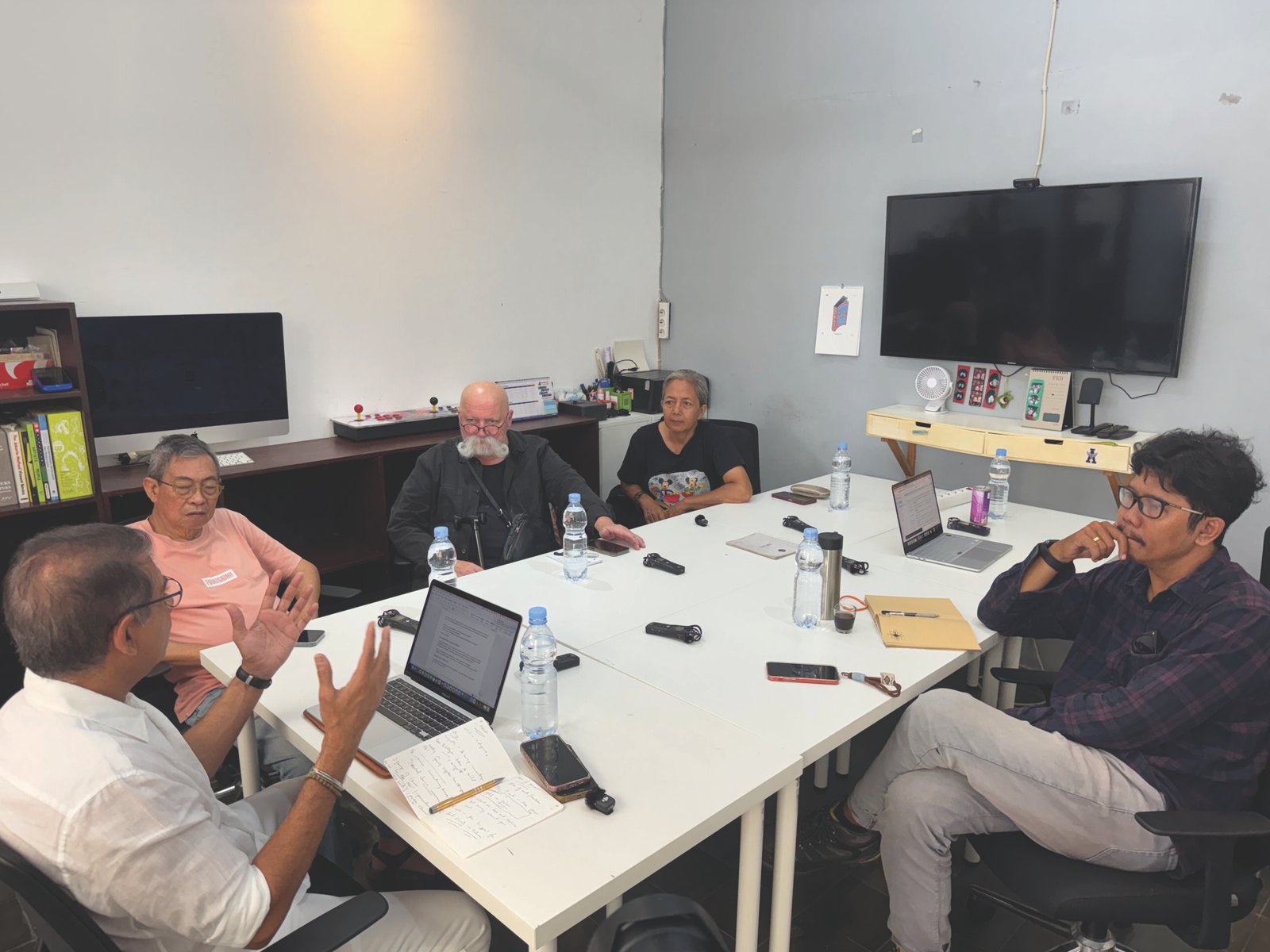
(clockwise) Professor Venka Purushothaman, FX Harsono, Professor Milenko Prvački, Arahmaiani, Anang Saptoto
Photo: Leonardo Cinieri Lombroso
Venka Purushothaman
Singapore’s greening began partly as beautification, but there has been a shift toward nature. There are nature corridors so monkeys and birds can cross safely when highways are built. Singapore has a mission to plant a million trees. It is not only green for tourists; it is about liveability. Density is not determined only by economics but by whether people can live there.
Milenko Prvački
Visitors in Singapore stay downtown, but there are reservoirs and jungle areas. The zoo, bird park and night safari are moving into a more natural environment. It is not only decoration.
FX Harsono
Between Singapore and Indonesia, it is interesting to note that Singapore has a botanical garden built by Raffles, and Indonesia also has a botanical garden built by Raffles.
Venka Purushothaman
Raffles is remembered as the founder of Singapore, but his major contribution was also The History of Java.10 He understood flora and fauna and wrote about Java. Singapore was almost an accident for him.
Artists as Writers
Venka Purushothaman
As artists, you have been written about. Governments, curators and museums write about what you do. What is one thing art historians or curators misunderstand about your work?
FX Harsono
In Indonesia there are not many curators or art historians. Many curators work only for galleries. They write what the gallery orders. Only a few curators or art historians try to follow, understand and read what the artist is thinking. So for me, writing by myself about the concept and ideas behind my work is very important. I always tell young artists: you must write what you are thinking because not many people understand you. To make people understand what you are doing, you must write.
Anang Saptoto
Similar to Harsono, I started writing my practice because I did not have invitations to exhibitions and did not have a gallery contract. So I did not have catalogues, books or curators writing about me. I made a blog, not a dot-com website, but WordPress. I wrote everything there. When I collaborated with journalist associations or other communities, they read about me there. Texts about me often came not from curators but from other communities. I studied graffiti, so I know how to promote myself.
Venka Purushothaman
That is fascinating because you have the opportunity to write yourself the way you want to be read. You become the author of your journey. I am interested in artists as writers. For a period, artists were not expected to write because their language was their art. Now artists use writing, technology and other media to be more effective communicators, not necessarily to explain the art, but to create the context in which the art is produced.
This conversation has brought forward care, bridge-building and common ground. Artists work with communities not simply because there is a historical document to preserve or a social issue to address, but because there is care: care that lost histories must be told, care that heritage must be talked about and engaged, care that people can have agency in shaping their own agendas. Your practices build bridges between communities and power structures so that people are not made helpless by power. Through art, communities can speak about lost history, ancestral memory, collective identity and the future.
What is powerful is that Terra becomes common ground. Not a policy ground, not a financial ground, not a framework, but the ground where people occupy particular moments in history and ask what can be done. Common ground is not always discussed in art history, which often focusses on the object or the practice. Here, common ground has texture. It differs across each of your experiences, but it is where you land. It is where art becomes care, collaboration, activation and responsibility.
Thank you for sharing so much. This is not the end of the conversation. It is the beginning, and like all good things, it should continue.
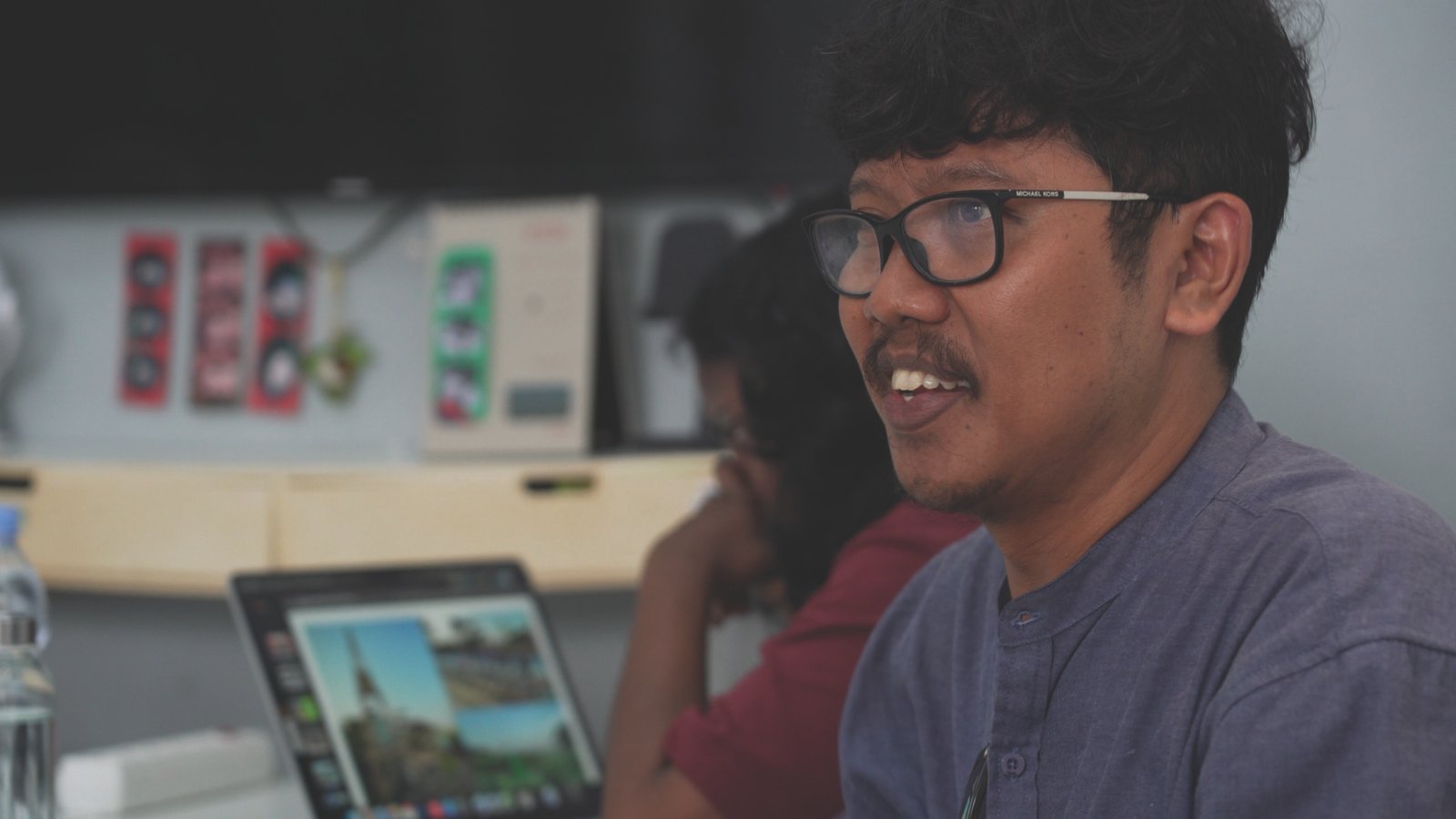
Anang Saptoto
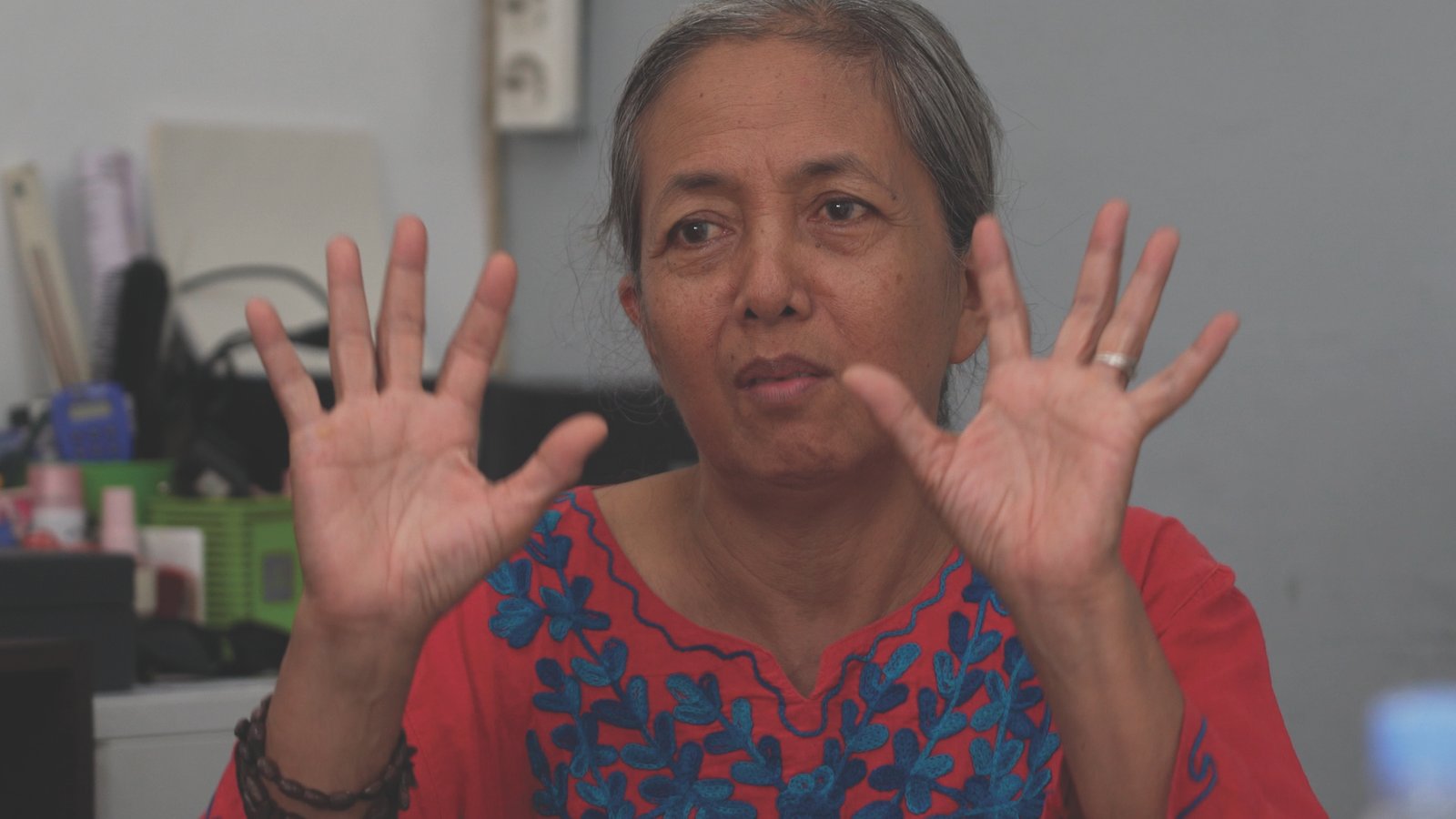
Arahmaiani
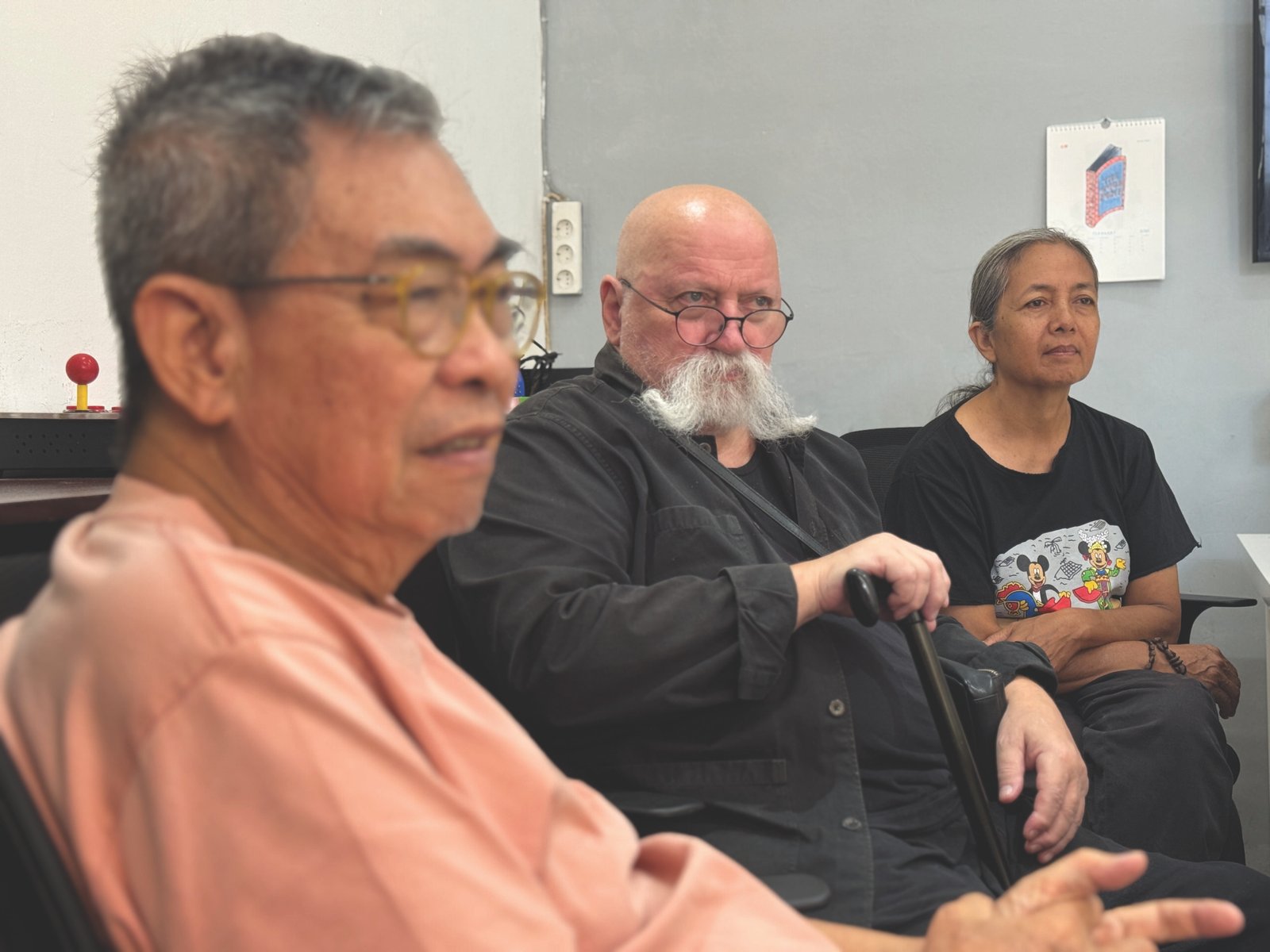
FX Harsono, Professor Milenko Prvački, Arahmaiani
This conversation was video recorded by filmmaker, Leonardo Cinieri Lombroso. He has kindly provided the photo stills.
Photos: Leonardo Cinieri Lombroso